Blog

  • Israeli Strike Reportedly Eliminates Hezbollah Missile Commander Mohammed Mousa Mteirek in Southern Lebanon, Triggering Fierce Questions Over Escalating Cross-Border War Near the Beaufort Area

    Israeli Strike Reportedly Eliminates Hezbollah Missile Commander Mohammed Mousa Mteirek in Southern Lebanon, Triggering Fierce Questions Over Escalating Cross-Border War Near the Beaufort Area

    A Hezbollah commander identified as Mohammed Mousa Mteirek has been reported killed, according to statements circulating from military sources.

    The development has drawn attention due to his alleged senior role within the group’s missile operations unit and his involvement in cross-border attacks.

    Role Within Hezbollah’s Missile Operations

    Mteirek was said to have served in multiple positions within Hezbollah’s missile array over time, gradually rising through the ranks.

    Reports describe him as a key figure involved in operational planning and coordination within the unit responsible for rocket and unmanned aerial vehicle activity.

    His role placed him within a broader structure focused on long-range strike capabilities, which have been central to recent escalations in the region.

    Allegations of Coordinated Attack Planning

    According to the same accounts, Mteirek was accused of directing and organizing a large number of rocket and UAV launches.

    These operations were reportedly aimed at both civilian areas and military positions across the border.

    The Beaufort area was specifically referenced in relation to Israeli military activity, with claims that operations under his supervision targeted personnel operating in that zone.

    Regional Tensions and Ongoing Conflict Context

    The reported killing comes amid continued hostilities involving Hezbollah and Israeli forces, where exchanges of fire and aerial strikes have remained frequent.

    Both sides have regularly accused each other of escalation and targeting strategic positions.

    Incidents involving senior commanders often heighten tensions further, as they are seen as significant disruptions to operational command structures.

    Limited Independent Verification

    At this stage, details surrounding the reported death of Mteirek have not been independently confirmed by all parties involved.

    Conflicting narratives are common in ongoing conflict zones, where information is often released through military statements or affiliated sources.

    Further updates are expected as more information becomes available and as official confirmations or denials are issued.

  • Giants Desperately Work Out Odell Beckham Jr, Braxton Berrios and JuJu Smith-Schuster as Injured Roster Collapses in New York Training Camp Crisis in New York

    Giants Desperately Work Out Odell Beckham Jr, Braxton Berrios and JuJu Smith-Schuster as Injured Roster Collapses in New York Training Camp Crisis in New York

    The New York Giants are set to host three wide receivers for workouts on Monday as the franchise scrambles to patch a rapidly thinning offensive unit hit hard by injuries just before the season gets underway.

    The move comes as concern grows over the condition of receiver Gunner Olszewski, who may have suffered a season-ending Achilles injury during Friday’s practice session, leaving the team’s depth chart in serious jeopardy.

    Olszewski Injury Sparks Alarm Inside Team Facility

    The most immediate worry surrounds Gunner Olszewski, who went down without contact during practice and had to be carted off the field after teammates gathered nearby.

    Early indications suggest a potentially severe Achilles tear, though official confirmation is still pending further medical evaluation.

    Head coach John Harbaugh offered only a brief update when asked about the situation, saying the team would “find out the situation” after additional testing, underscoring the uncertainty surrounding the player’s status.

    Injuries Pile Up Across Receiving Corps

    The Giants’ receiving room was already under pressure before Olszewski’s setback.

    Rising star Malik Nabers continues his recovery from a torn ACL and recently underwent a second procedure on his right knee to remove scar tissue that had caused stiffness.

    Meanwhile, veteran target Darius Slayton is also unavailable while recovering from hernia surgery, leaving the roster severely depleted at a critical position.

    With multiple key contributors sidelined, the organization has been forced into urgent contingency planning ahead of the opening stretch of the season.

    Beckham Jr Headlines High-Profile Tryout Group

    According to ESPN’s Adam Schefter, the Giants will evaluate three notable veterans on Monday: Odell Beckham Jr., Braxton Berrios, and JuJu Smith-Schuster.

    Beckham Jr., now 33, has been out of the league since his release from the Miami Dolphins in December 2024.

    His recent career has also included a six-week suspension for violating the NFL’s performance-enhancing drugs policy.

    Despite the controversy, he remains one of the most recognizable names on the market and a former first-round pick of the Giants, where he began his NFL career in 2014.

    Berrios arrives as a versatile but lightly used option after a brief stint with the Houston Texans, where he appeared in only four games.

    Once a key return specialist, his offensive production last season was limited, recording just six catches for 37 yards.

    Smith-Schuster brings the most recent championship pedigree, having won a Super Bowl with the Kansas City Chiefs in 2023.

    After multiple team changes in recent seasons, he posted 33 receptions for 345 yards and a touchdown last year during a disappointing campaign that saw the Chiefs miss the playoffs.

    Familiar Faces and High Stakes in Tryout Battle

    For Beckham Jr., the workout marks a potential return to the franchise that drafted him 12th overall in 2014, where he famously won Offensive Rookie of the Year and delivered one of the NFL’s most iconic one-handed touchdown catches against the Dallas Cowboys in his debut season.

    After leaving New York following the 2018 season, he spent time with the Cleveland Browns before his more recent stops elsewhere in the league.

    Berrios, meanwhile, has also attracted attention off the field due to his previous relationship with influencer Alix Earle, though his focus now is firmly on securing another NFL opportunity.

    Giants Hope for Stability Before Season Kickoff

    With uncertainty surrounding Olszewski’s injury and recovery timelines for Nabers and Slayton still unclear, the Giants face a precarious situation at wide receiver just weeks before their season opener.

    The team remains hopeful that Nabers could return in time for the Week 1 matchup against the Dallas Cowboys, but internally the mood is cautious rather than confident as depth concerns continue to grow.

  • “Red Lobster Shocks New York City as It Closes Iconic Times Square Restaurant After 23 Years Due to Construction Chaos and Housing Redevelopment Plans”

    “Red Lobster Shocks New York City as It Closes Iconic Times Square Restaurant After 23 Years Due to Construction Chaos and Housing Redevelopment Plans”

    Red Lobster has announced it will shut down its well-known Times Square location in Manhattan, marking the end of a 23-year run in one of New York City’s busiest commercial districts.

    The restaurant will officially close its doors on Sunday, June 14, as the company continues to reassess its footprint amid broader operational changes.

    The decision affects one of the brand’s most recognizable urban sites, which had become a fixture for tourists and locals seeking the chain’s signature seafood offerings in the heart of Manhattan.

    Construction Disruption and Redevelopment Plans Drive Decision

    In a statement, Red Lobster described the Times Square restaurant as an “important chapter” in its corporate history, but pointed to long-running construction on 41st Street as a major factor in the closure.

    According to the company, ongoing building works have significantly reduced visibility, accessibility, and customer traffic.

    Compounding those challenges is a planned conversion of the building into residential housing.

    With declining practicality as a commercial dining site, the company concluded that continuing operations at the location was “no longer viable.”

    Staff Offered Transfers and Support Packages

    Despite the closure, Red Lobster emphasized that employees will not be left without options.

    All staff members working at the Manhattan restaurant are being offered transfers to other locations of their choice within the chain.

    The company also confirmed that additional financial support will be provided to assist workers during the transition period, as it attempts to maintain stability for affected employees amid the shutdown.

    A Cult-Favourite Location With Strong Customer Loyalty

    Over its two-decade presence in Times Square, the restaurant developed a loyal following, becoming something of a nostalgic stop for both visitors and New Yorkers.

    Social media reactions to the announcement reflected disappointment from diners who had personal connections to the location.

    Some former customers shared memories of final visits, while others expressed regret at missing the chance to dine there before its closure.

    Signature menu items such as the chain’s well-known cheddar bay biscuits were repeatedly mentioned as sentimental favourites tied to the location.

    For those looking to continue enjoying the menu, the nearest remaining outlet is now located in Secaucus, New Jersey.

    Endless Shrimp Promotion Remains a Talking Point

    The closure comes as Red Lobster continues to revisit its controversial “Endless Shrimp” promotion, a deal that has played a notable role in the company’s recent financial history.

    The offer allows customers to mix and match shrimp dishes starting at $24.99, including options such as shrimp scampi and coconut shrimp.

    Originally contributing to unexpectedly high customer demand, the promotion was previously linked to significant financial strain, with reports estimating multi-million-dollar losses during its earlier rollout.

    That pressure formed part of the wider challenges that pushed the company into Chapter 11 bankruptcy protection in 2024.

    Bankruptcy, Restructuring, and New Leadership

    Following its bankruptcy filing in May 2024, Red Lobster underwent restructuring and eventually emerged under new ownership later that year.

    A refreshed leadership team was installed, including current chief executive Damola Adamolekun.

    At the time of the revival discussions, the CEO had expressed caution about reinstating the Endless Shrimp deal, noting concerns about its impact on kitchen operations and profitability.

    Despite that, a limited version of the promotion has now returned, though it is restricted to dine-in customers.

    Broader Downsizing Across the Chain

    The Times Square closure is not an isolated move.

    It follows recent announcements that another long-standing Red Lobster restaurant in Tallahassee, Florida—operating for more than 50 years—will also be shutting down.

    The company has stated that it regularly reviews restaurant performance and lease agreements, and may choose to close or relocate locations based on financial and operational considerations.

  • Iran and United States Escalate Military Strikes as Tehran and Washington Exchange Deadly Drone and Missile Attacks Across the Middle East in Ongoing Regional Conflict Over Strait of Hormuz

    Iran and United States Escalate Military Strikes as Tehran and Washington Exchange Deadly Drone and Missile Attacks Across the Middle East in Ongoing Regional Conflict Over Strait of Hormuz

    Tensions between Iran and the United States escalated again over the weekend and into Monday as both countries exchanged military strikes, highlighting the growing instability of a ceasefire that has struggled to hold in recent weeks.

    The renewed hostilities unfolded while diplomatic efforts aimed at ending the broader conflict remained stalled, raising concerns about the prospects for a lasting peace agreement.

    According to the U.S. military, American forces launched what officials described as defensive operations after Iran allegedly targeted U.S. assets in the region.

    The latest confrontation represents another setback for negotiations that have yet to produce a breakthrough despite months of discussions.

    Kuwait Reports Interceptions Amid Regional Security Threats

    The regional fallout from the conflict became evident Monday when Kuwait announced that its air-defense systems had intercepted incoming missile and drone threats.

    Authorities said residents heard explosions as defense units responded to hostile aerial targets.

    Kuwaiti officials did not identify who launched the attack or what the intended objective was.

    However, the development immediately drew attention because Kuwait hosts a significant American military presence, including a major U.S. air base that has previously been targeted by Iran and groups aligned with Tehran.

    U.S. Says Iranian Drone Incident Triggered Response

    American military officials stated that the latest strikes were carried out after Iran allegedly shot down a U.S. MQ-1 drone that was operating over international waters.

    The U.S. Central Command reported that American aircraft subsequently struck military targets in Goruk and on Qeshm Island.

    Officials said the operation destroyed Iranian air-defense assets, a drone-control facility, and two attack drones that were considered an immediate danger to vessels navigating key regional waterways.

    Military leaders emphasized that no American personnel were injured during the operation.

    Iran Issues Warning After Retaliatory Action

    Iran swiftly announced its own response to the American strikes.

    The Islamic Revolutionary Guard Corps said its aerospace division targeted the origin of what it described as a U.S. attack on a telecommunications facility located on Sirik Island in Hormozgan province.

    While Iranian officials did not reveal the exact location of the target they struck, state media carried statements warning Washington against further military action.

    The Guard declared that continued American attacks would provoke a significantly stronger response and said the United States would be responsible for any resulting consequences.

    Ceasefire Under Growing Strain

    The latest military exchange adds to a series of confrontations that have occurred despite a ceasefire agreement reached in early April.

    Since then, both sides have repeatedly accused one another of violating the truce, with attacks continuing across several fronts.

    One of the most notable incidents occurred last week when Iran launched an attack against a military air base, further eroding confidence in the ceasefire’s durability.

    Nuclear Disputes Continue to Stall Peace Talks

    Efforts to negotiate a comprehensive settlement remain hindered by disagreements surrounding Iran’s nuclear ambitions and missile development programs.

    President Donald Trump attempted to project optimism about the talks despite criticism that negotiations have advanced slowly.

    In a social media message Monday, Trump urged observers to remain patient, arguing that Iran remains interested in reaching an agreement that would benefit both the United States and its allies.

    Strategic Waterway Remains Central to Conflict

    The war has inflicted a heavy toll, claiming thousands of lives, particularly in Iran and Lebanon, while also resulting in the deaths of 13 American service members.

    Beyond the human cost, the conflict has disrupted global energy markets after Iran effectively closed the Strait of Hormuz, a vital shipping corridor through which a significant share of the world’s oil exports passes.

    Trump has repeatedly stated that any final agreement must guarantee that Iran never acquires a nuclear weapon.

    He has also demanded the full reopening of the Strait of Hormuz to unrestricted maritime traffic and the removal of any naval mines from the strategic waterway.

    Iran, meanwhile, has accused Washington of complicating negotiations by insisting on conditions Tehran considers excessive.

    Lebanon Conflict Adds Another Layer of Complexity

    The diplomatic picture has become even more complicated because of ongoing fighting in Lebanon.

    Israeli military operations against the Iran-backed Hezbollah group have continued despite separate ceasefire arrangements.

    Israeli Prime Minister Benjamin Netanyahu said Sunday that Israel intends to maintain control over additional territory in southern Lebanon following the capture of Beaufort Ridge, a strategically significant hilltop position.

    The move represents Israel’s deepest advance into Lebanon in more than twenty years.

    Diplomatic Contacts Continue Behind the Scenes

    Despite continued violence, diplomatic efforts have not stopped. U.S. officials confirmed that Secretary of State Marco Rubio recently held discussions with Benjamin Netanyahu and Joseph Aoun as part of attempts to lower tensions.

    According to a U.S. official, Rubio proposed a framework designed to create conditions for a gradual reduction in hostilities and eventually achieve a more effective ceasefire, though details of the proposal were not disclosed.

    Iran Links Lebanon Ceasefire to Broader Negotiations

    Iranian Foreign Ministry spokesman Esmail Baghaei argued Monday that developments in Lebanon remain closely connected to wider negotiations involving Tehran and Washington.

    Baghaei described a ceasefire in Lebanon as essential both to preserving the current truce and to achieving any long-term settlement of the war.

    He also accused the United States of violating ceasefire commitments through attacks on Iranian commercial shipping, characterizing those actions as aggression against Iran.

    No Breakthrough Yet Despite Ongoing Communication

    Although communication channels remain open, officials on both sides acknowledged that major differences persist.

    Baghaei confirmed that messages continue to be exchanged between Tehran and Washington, but said negotiations have yet to produce a final agreement.

    With military clashes continuing, regional tensions rising, and multiple conflicts intertwined, prospects for a comprehensive peace deal remain uncertain as both sides balance diplomatic engagement with continued military pressure.

  • Election Chaos Erupts in Los Angeles as Burned Mail Ballots Are Discovered Inside Downtown Drop Box and Investigators Scramble to Uncover Possible Voter Interference Before Election Day

    Election Chaos Erupts in Los Angeles as Burned Mail Ballots Are Discovered Inside Downtown Drop Box and Investigators Scramble to Uncover Possible Voter Interference Before Election Day

    Los Angeles County election officials have launched investigations into two separate incidents that raised concerns about election security just days before voters head to the polls.

    The cases involve damaged mail-in ballots discovered inside a ballot drop box and vandalism reported at a local voting location.

    Authorities say both incidents were detected over the weekend and are being treated seriously as efforts continue to safeguard the integrity of the election process.

    Fire-Damaged Ballots Found in Downtown Drop Box

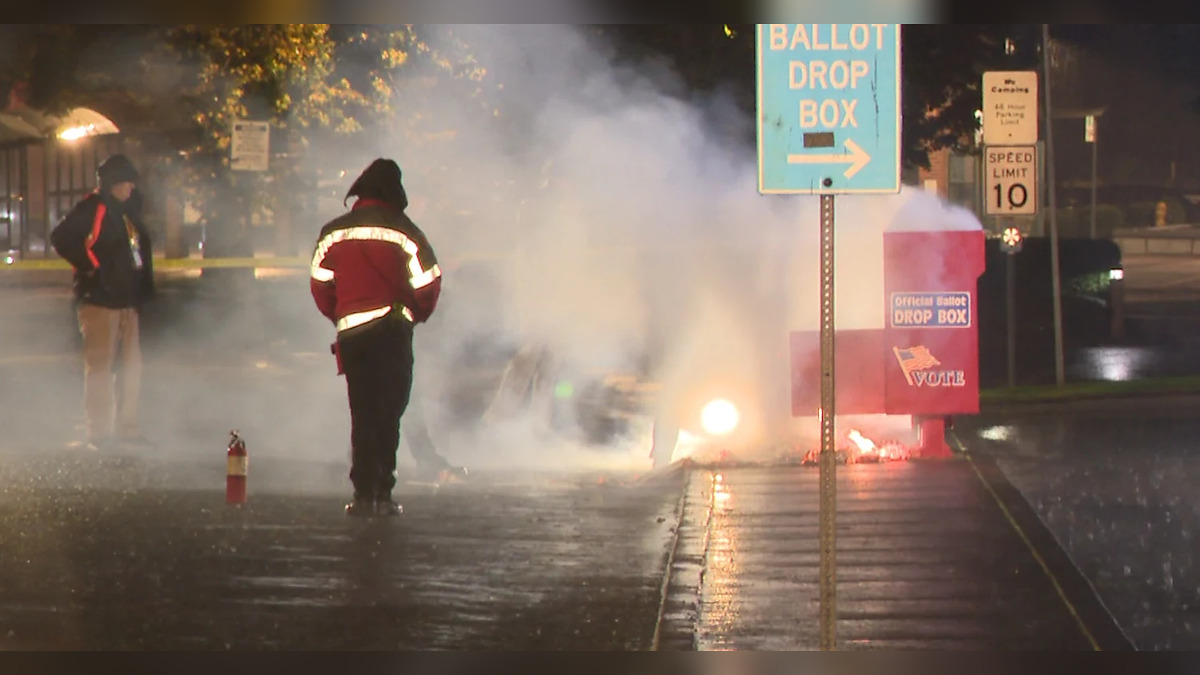
    One of the investigations centers on a ballot drop box located near the Civic Center in downtown Los Angeles.

    According to county election officials, a limited number of vote-by-mail ballots were found with signs of fire damage during a routine inspection on Sunday morning.

    Aerial footage captured by AIR7 documented the area surrounding the drop box.

    Following the discovery, election officials promptly notified the Los Angeles Police Department and filed an official report.

    Investigators are now working to determine how the ballots were damaged and whether the incident was intentional.

    Voting Center Targeted by Vandals

    In a separate occurrence, election workers discovered evidence of vandalism at a voting center situated in Cesar E. Chavez Park early Sunday.

    County officials emphasized that despite the damage, voting activities at the site were not interrupted.

    The facility remained operational, and election services continued without disruption.

    Authorities are examining the circumstances surrounding the vandalism and assessing whether it was connected to broader attempts to interfere with election operations.

    Officials Assess Potential Impact on Voters

    Election administrators are reviewing both incidents to identify whether any registered voters were affected.

    Officials indicated that individuals whose ballots may have been compromised will receive direct communication outlining the next steps available to them.

    Those options may include obtaining replacement ballots to ensure their votes can still be counted.

    County representatives stressed that every effort is being made to protect voters and preserve access to the electoral process.

    County Leaders Condemn Attempts to Disrupt Elections

    Los Angeles County Board Chair and First District Supervisor Hilda L. Solis strongly criticized any actions that could undermine public confidence in elections.

    She reaffirmed the county’s commitment to ensuring eligible residents can vote securely and without intimidation.

    Solis said attempts to damage election materials, interfere with voting facilities, or disrupt election operations are unacceptable and will be met with a coordinated response involving election administrators and law enforcement agencies.

    According to county leaders, protecting voters and maintaining trust in the electoral system remain top priorities as Election Day approaches.

    Public Urged to Report Suspicious Activity

    Election officials also reminded residents that tampering with ballots, voting equipment, election materials, or voting facilities is prohibited by law.

    Members of the public are being encouraged to remain vigilant and report any suspicious behavior involving voting operations or election infrastructure.

    County authorities say community cooperation can play an important role in helping protect the voting process and ensuring every eligible ballot is properly counted.

  • Former New Zealand Bowling Coach Shane Jurgensen Warns England in Wellington That Will O’Rourke Will Deliver Brutal Pace Attack in New Zealand Test Cricket Clash

    Former New Zealand Bowling Coach Shane Jurgensen Warns England in Wellington That Will O’Rourke Will Deliver Brutal Pace Attack in New Zealand Test Cricket Clash

    A former New Zealand bowling mentor has cautioned England about the danger posed by a young fast bowler he describes with a chilling nickname, warning that facing him can quickly turn uncomfortable for even the most experienced batters.

    Shane Jurgensen, who spent two separate spells shaping the Black Caps’ bowling attack over a decade, believes England could be drawn into a physical and psychological battle if they underestimate rising seamer Will O’Rourke.

    Now working as head coach of Wellington and on secondment as a bowling consultant with Gloucestershire, Jurgensen drew on years of experience developing elite pace attacks to explain why O’Rourke stands out as a uniquely difficult opponent.

    The Rise of a Bowler Known as “Nasty”

    Jurgensen has given O’Rourke an uncompromising nickname—“Nasty”—not as a criticism of character, but as a reflection of the discomfort he can generate with the ball in hand.

    He describes the 6ft 5in pacer as a “gentle giant” off the field, but insists his on-field presence is far more intimidating, especially on lively pitches.

    According to Jurgensen, the reaction from domestic batters facing O’Rourke in Wellington has often been immediate surprise at the steep bounce and aggressive carry he generates.

    The coach explained that his pace, combined with a high release point and awkward angle, makes him particularly difficult to line up, even before factoring in his natural movement through the air.

    A Rare Blend of Bounce, Pace and Angle

    O’Rourke’s bowling threat, Jurgensen says, lies in a combination of attributes rather than a single standout skill.

    His height allows him to release the ball from an unusually steep angle, meaning the ball climbs quickly off the pitch and often follows the batter in a visually unsettling trajectory.

    He also brings in movement towards right-handed batters while maintaining high speed, creating a dual challenge of lateral movement and bounce.

    That combination, Jurgensen argues, is what made him especially effective during New Zealand’s strong Test performances abroad, including a dominant series against India.

    Breakthrough Performances and Setbacks

    One of O’Rourke’s most notable contributions came during New Zealand’s series win in India, where the team achieved a rare 3–0 Test victory.

    In the opening match in Bengaluru, India were dismissed for just 46, their lowest-ever home Test total, with O’Rourke playing a significant role by taking seven wickets.

    Across his early Test career, the young bowler has taken 39 wickets in 11 matches, including a productive series against England at home, where he claimed 10 wickets across three Tests.

    However, his progress has been slowed by recurring back problems, limiting his appearances and preventing sustained continuity at international level.

    He has also been carefully managed in domestic cricket, including restricted County Championship involvement with Yorkshire.

    New Zealand’s Managing of a Fragile Fast-Bowling Unit

    O’Rourke is part of a wider group of New Zealand pacers whose workloads are being carefully monitored due to injury concerns, particularly stress-related back issues.

    He has often been mentioned alongside fellow fast bowler Kyle Jamieson, another towering seamer who has faced similar physical setbacks.

    Despite these challenges, New Zealand’s pace group—also featuring Matt Henry—remains central to their Test strategy, especially as players return from franchise commitments such as the Indian Premier League.

    The Jurgensen Blueprint for Fast-Bowling Success

    During his time with New Zealand cricket between 2008–2010 and 2016–2023, Jurgensen played a central role in building one of the most consistent Test bowling units in world cricket.

    That era featured the highly successful trio of Tim Southee, Trent Boult, and Neil Wagner, who collectively formed a cornerstone of the Black Caps’ rise to becoming World Test Champions.

    Jurgensen’s approach emphasized rotation, physical conditioning, and tactical adaptability—methods that allowed New Zealand to remain competitive across varying conditions and formats.

    Building a Relentless Bowling Culture

    Central to that success was a training culture that blended structure with competitive freedom.

    Players often trained in shared environments where batters and bowlers would openly exchange tactical insights.

    Figures such as Kane Williamson and Colin de Grandhomme were part of informal but intense sessions around Mount Maunganui, where competitive net battles mirrored match situations.

    Jurgensen recalled how bowlers and batters would break down techniques in detail—discussing angles, lengths, and movement patterns with unusual specificity for training environments.

    He also described improvised “backyard” style sessions at Bay Oval, where gym work and net practice blended into highly competitive mini-encounters designed to sharpen skills under pressure.

    A System Built on Communication and Detail

    One example highlighted by Jurgensen involved swing bowling discussions between Boult and Williamson, where subtle adjustments in release angle and seam movement were debated and refined in real time.

    Rather than rigid coaching instructions, the environment encouraged players to collaborate on solutions, creating a shared understanding of what worked in different conditions.

    That philosophy, he argues, helped New Zealand consistently develop bowlers capable of adapting quickly to international demands.

    England Warned of a New-Type Challenge

    With O’Rourke now emerging as part of New Zealand’s next generation of fast bowlers, Jurgensen believes England could soon face a more unpredictable and physically testing opponent than they expect.

    While injuries have interrupted his progress, his underlying skill set and physical presence make him, in Jurgensen’s words, a bowler who can make batters instantly uncomfortable—especially in conditions that offer bounce and movement.

  • Scientists in Italy Reveal That Researchers Uncover Shocking Evidence That Asteroid-Level Heat Created Mysterious Libyan Desert Glass Across Egypt and Libya in Ancient Sahara Study

    Scientists in Italy Reveal That Researchers Uncover Shocking Evidence That Asteroid-Level Heat Created Mysterious Libyan Desert Glass Across Egypt and Libya in Ancient Sahara Study

    A new scientific study has added fresh detail to one of Earth’s most puzzling geological mysteries—Libyan Desert Glass, the yellow, glass-like material scattered across parts of Egypt and Libya.

    Long believed to have formed during a violent cosmic event roughly 29 million years ago, the material has now revealed microscopic evidence pointing to extreme temperatures and rapid cooling conditions unlike typical geological processes.


    A Rare Mineral Inside Ancient Desert Glass

    Researchers examining samples of the glass discovered an unusual inclusion: a tiny zircon crystal embedded within the material.

    The study, conducted by scientists at the University of Milano-Bicocca in Italy, focused on this microscopic structure as a potential record of the conditions that formed the glass.

    Zircon is known for its resilience and is often used in geology to reconstruct ancient environmental events.

    But this particular crystal—measuring only about 20 micrometers, smaller than a human hair—showed an unexpected dendritic, or tree-like, structure, suggesting it formed extremely quickly from molten material.


    Evidence of Extreme Heat Beyond Volcanic Levels

    Using advanced imaging techniques such as electron microscopy and 3D diffraction analysis, researchers examined the crystal’s internal structure in detail.

    What they found suggested the zircon had completely melted and then rapidly recrystallized.

    Chemical analysis revealed additional clues: the trapped material inside the zircon contained elevated levels of aluminum and zirconium, differing from the surrounding glass.

    These variations indicate that the material likely originated as a separate molten droplet before becoming trapped during cooling.

    Based on the chemical signatures, scientists estimate that temperatures during the event exceeded approximately 4,082°F (2,250°C)—far hotter than typical volcanic eruptions, which usually range between 1,292°F and 2,192°F.


    A Violent and Chaotic Formation Process

    The study suggests that Libyan Desert Glass formed under highly unstable conditions, where intense heat melted both zircon and silica-rich desert material.

    This created droplets of molten matter that cooled so rapidly they preserved evidence of their formation process in real time.

    Researchers also noted that the atomic structure of the trapped glass differed slightly from the surrounding material, with longer atomic bonds indicating a distinct cooling history.

    This supports the idea that multiple molten components may have solidified independently within the same event.


    The Ongoing Debate: Asteroid Impact or Atmospheric Explosion?

    Despite the new findings, scientists still disagree on what triggered the formation of the glass.

    One leading theory suggests an asteroid or comet struck the Earth, generating enough energy to melt surface rocks into glass.

    Another hypothesis proposes that a space object exploded in the atmosphere before impact, releasing intense heat that scorched the desert surface without leaving a crater.

    The absence of a confirmed impact crater continues to challenge researchers.

    Over the years, several candidate sites have been proposed, but none have withstood scientific scrutiny, keeping the mystery unresolved.


    Ancient Egypt’s Connection to a Cosmic Event

    Libyan Desert Glass is not only a geological curiosity but also a material of historical significance.

    Ancient Egyptians valued the yellow glass so highly that they incorporated it into royal artifacts, including jewelry found in the tomb of King Tutankhamun.

    Artifacts such as scarabs carved from the glass highlight its cultural importance and suggest that ancient civilizations may have prized it without knowing its extraterrestrial origins.


    A Glimpse Into One of Earth’s Most Extreme Events

    Although the new zircon evidence does not definitively solve the mystery of how Libyan Desert Glass formed, it strengthens the case for an extraordinary high-energy event in Earth’s past.

    The crystal effectively acts as a microscopic time capsule, preserving traces of extreme heat and rapid cooling in a way rarely seen in natural materials.

    For now, the origin of the “alien glass” remains unresolved—but scientists are getting closer to understanding the violent forces that shaped one of the Sahara’s most enigmatic materials.

  • “Southampton Staff Secretly Orchestrate Illegal Spying Campaign Across Championship Clubs in England as WhatsApp Messages Expose Club’s Covert Operations and Shock Football Authorities”

    “Southampton Staff Secretly Orchestrate Illegal Spying Campaign Across Championship Clubs in England as WhatsApp Messages Expose Club’s Covert Operations and Shock Football Authorities”

    Fresh details contained in the written findings of the League Arbitration Panel have revealed the extent of a covert scouting operation that ultimately led to severe sanctions against Southampton.

    The club had already admitted to spying on Oxford United and Ipswich Town during the regular campaign, as well as Middlesbrough before their Championship play-off semi-final clash.

    The newly released documents provide an inside look at how the operation was carried out, including messages exchanged among staff members tasked with monitoring opponents’ training sessions.

    Junior Staff Describe Feeling Forced Into Role

    One of the most striking revelations comes from a junior analyst who was sent to observe Oxford United’s training ahead of a December meeting with Southampton.

    According to evidence presented to the disciplinary commission, the analyst later told colleagues he felt he had little choice but to comply.

    In a message quoted in the report, he explained that he was an intern at the time and believed he was simply following instructions from senior figures.

    The analyst indicated that refusing the assignment was never presented as an option.

    After relaying information gathered from the session, he reportedly received a congratulatory response from a superior that read: “You legend. Manager loved it.”

    Concerns Raised Before Second Mission

    The report also details how the same analyst was later asked to monitor Ipswich Town.

    Despite expressing reservations about repeating the exercise, he was informed that the coaching staff were determined for the operation to go ahead.

    Messages cited in the findings suggest that pressure came from senior leadership, with the analyst being told that the head coach insisted someone needed to attend and gather information.

    Staff Member Warned Practice Was Wrong

    The written reasons reveal that not everyone involved at the club supported the surveillance activities.

    Following the exposure of the operation, another analyst reportedly sent a message to a colleague expressing frustration that earlier concerns had been ignored.

    According to the report, the staff member stated that he had repeatedly voiced discomfort with the spying activities and believed they were inappropriate, but his objections were not acted upon.

    Middlesbrough Incident Triggered Investigation

    The controversy escalated before Southampton’s play-off semi-final against Middlesbrough.

    The documents explain that the intern assigned to observe Middlesbrough’s training session was eventually identified by club personnel.

    The discovery became a pivotal moment in the case, drawing wider attention to Southampton’s methods and prompting formal scrutiny.

    According to the report, the analyst learned that allegations of spying had become public while he was travelling by train from Middlesbrough back to Southampton.

    Panel Criticises Leadership’s Role

    Earlier disciplinary findings had already painted a damaging picture of the club’s conduct.

    The independent commission described the operation as a carefully organised scheme that originated from senior levels within the football department.

    The panel concluded that the surveillance programme was not the result of isolated actions by junior employees but rather a deliberate strategy approved by head coach Tonda Eckert and implemented throughout the organisation.

    Attempt to Remove Evidence Online

    The newly published documents also allege that Southampton sought to limit the fallout once the spying allegations emerged.

    Among the claims detailed in the report is an effort by the club to have images of the intern involved removed from online platforms.

    Those actions formed part of the evidence reviewed by the League Arbitration Panel during Southampton’s unsuccessful appeal against sanctions.

    Heavy Punishment Remains in Place

    Southampton challenged the penalties imposed after the spying scandal came to light, but the appeal failed.

    The club had already been expelled from the Championship play-offs and handed a four-point deduction to be applied in the following season.

    The release of the WhatsApp messages has now provided the clearest account yet of how the operation was allegedly planned and executed, while highlighting the concerns raised by junior staff members who say they felt compelled to participate despite ethical objections.

  • Shocking $1.26 Billion Bitcoin ETF Trade Sees Mysterious Whale Dump BlackRock’s IBIT Shares in Private Dark Pool in United States Sparking Market Panic Debate

    Shocking $1.26 Billion Bitcoin ETF Trade Sees Mysterious Whale Dump BlackRock’s IBIT Shares in Private Dark Pool in United States Sparking Market Panic Debate

    A staggering $1.26 billion transaction involving iShares Bitcoin Trust (IBIT) has triggered intense speculation in financial markets, after analysts suggested the trade may represent a large investor abruptly exiting a major position.

    The block sale, executed last week, has drawn attention not only for its size but also for the method used, raising questions about whether it signals shifting sentiment among sophisticated crypto-linked investors.

    Dark Pool Sale of 29 Million Shares Raises Market Mystery

    On Tuesday, approximately 29.2 million shares of IBIT were reportedly sold through a dark pool — a private trading venue typically used by institutions seeking to avoid immediate public market impact.

    The seller accepted a price roughly $1.01 below the prevailing market level, a discount that analysts say may indicate urgency.

    The transaction has since fueled debate over whether the move was strategic repositioning or a forced liquidation.

    NYDIG Analyst Suggests Directional Investor Exit, Not Hedging Unwind

    Greg Cipolaro, head of research at NYDIG, stated in a Friday note that the available evidence points more toward a single large holder exiting a concentrated position rather than the unwinding of a hedged trade structure.

    According to Cipolaro, the willingness to accept a significant execution cost—estimated at nearly $29.5 million in foregone value—suggests the seller prioritized speed and certainty over price optimization.

    He noted that such behavior is typically associated with investors who are reducing exposure quickly rather than gradually adjusting a portfolio.

    Market Absorbs Shock as Bitcoin Slides but Avoids Panic

    Despite the scale of the transaction, broader markets remained relatively stable.

    Bitcoin fell around 2.8% in the trading session following the trade, but analysts noted that liquidity absorbed the sale without significant disruption.

    Bloomberg ETF analyst Eric Balchunas commented that the market handled the block trade more smoothly than expected, given its size.

    The absence of a sharper selloff has added to uncertainty about the identity and motivation of the seller.

    ETF Outflows and Weak Sentiment Add to Market Pressure

    The block trade occurred against a backdrop of sustained outflows from U.S.-listed Bitcoin exchange-traded funds.

    Data from Farside Investors shows 11 consecutive trading days of net withdrawals, including a $333.6 million outflow on the same day as the IBIT sale.

    In total, more than $2.9 billion has exited Bitcoin ETFs since mid-May, reflecting cooling demand after earlier inflows.

    At the same time, sentiment indicators have weakened.

    The Crypto Fear & Greed Index registered a score of 29, signaling “fear” in the market and reinforcing concerns about investor caution.

    Analysts Debate Whether Sale Was Forced or Strategic Move

    Cipolaro emphasized that public data cannot definitively explain the seller’s motivation.

    He outlined two main possibilities: a forced sale driven by liquidity or balance-sheet constraints, or a deliberate decision to rapidly reduce exposure to Bitcoin-linked assets.

    However, he added that the combination of ETF outflows, weak sentiment, and the premium paid to exit quickly appears more consistent with a discretionary liquidation by a sophisticated investor.

    The identity of the seller remains unknown, but the scale and urgency of the transaction have made it one of the most closely watched Bitcoin ETF trades in recent weeks.

  • Olukoya, Investors King CEO, Dominates Global Forex Debate as He Publishes Hard-Hitting Market Forecasts Across Leading Financial Platforms Worldwide

    Olukoya, Investors King CEO, Dominates Global Forex Debate as He Publishes Hard-Hitting Market Forecasts Across Leading Financial Platforms Worldwide

    Olukoya, the Chief Executive Officer and Founder of Investors King Limited, has built a reputation in financial journalism and market analysis over more than 20 years in global foreign exchange and macroeconomic research.

    His work has focused heavily on interpreting currency movements, macroeconomic trends, and investment opportunities across both developed and emerging markets.

    Experience Spanning Forex and Macroeconomic Research

    Over the course of his career, Olukoya has worked as a seasoned foreign exchange research analyst, developing expertise in global financial systems and market behavior.

    His analysis has frequently centered on how macroeconomic indicators—such as interest rates, inflation, and policy shifts—impact currency valuation and investment flows.

    This long-term exposure to global markets has positioned him as a consistent voice in discussions around financial trends, particularly within emerging economies where market volatility often creates both risk and opportunity.

    Published Contributor to Major Financial Platforms

    In addition to his analytical work, Olukoya has contributed written insights to several widely recognized financial and business publications.

    His commentary has appeared on platforms including Yahoo Finance, Business Insider, Nasdaq, Entrepreneur.com, and InvestorPlace, among others.

    Through these outlets, he has shared perspectives on market dynamics, investment strategy, and global economic developments, reaching a broad international readership.

    Focus on Market Insight and Economic Interpretation

    Olukoya is known for delivering detailed market analysis that connects short-term trading movements with broader macroeconomic conditions.

    His work often emphasizes clarity in interpreting complex financial data, making global market trends more accessible to investors and readers.

    He has also developed a reputation for breaking down currency market behavior in a way that highlights both structural drivers and immediate market sentiment.

    Commitment to Financial Literacy in Emerging Economies

    Beyond market reporting and analysis, Olukoya has been widely associated with efforts to promote financial literacy, particularly in emerging markets.

    His commentary frequently highlights the importance of informed investing and economic awareness in regions where access to financial education may be limited.

    Through his writing and media presence, he continues to advocate for stronger understanding of global finance among individual investors and developing market participants.