Category: Politics

  • Labour Party Shocks Rivals as It Completes Controversial 2027 Primaries and Selects Senate Candidates in Peaceful Anambra Election Process

    Labour Party Shocks Rivals as It Completes Controversial 2027 Primaries and Selects Senate Candidates in Peaceful Anambra Election Process

    The Labour Party in Anambra State has formally concluded its internal primaries for the 2027 general elections, producing candidates who will contest seats in the Senate and House of Representatives across key constituencies in the state.

    The exercise, which took place under close party supervision, was described by officials as orderly, inclusive, and in line with internal democratic procedures.

    Party Leadership Declares Transparent Process

    Announcing the outcome in Awka on Thursday, the state chairman of the Labour Party, Peter Okoye, said the primaries were conducted using the Option A4 voting system, a method that allowed open participation by accredited members and delegates.

    Okoye stated that the process recorded strong turnout from aspirants, party members, stakeholders, and observers, reinforcing what he described as the party’s commitment to grassroots democracy.

    He added that the conduct of the exercise reflected discipline and transparency, noting that it aligned with both the Labour Party constitution and relevant electoral guidelines governing the 2026 election cycle.

    Option A4 Voting System Drives Grassroots Participation

    According to party officials, the Option A4 system played a central role in ensuring visibility and openness during voting, allowing members to directly witness the selection process.

    The state chairman emphasized that the party remains committed to strengthening internal democracy, saying the peaceful nature of the exercise was a positive sign ahead of a competitive general election season.

    He further assured all nominated candidates that the party structure would be fully mobilized to support their campaigns ahead of 2027.

    Candidates Emerge for Senate and House of Representatives

    The primaries produced candidates across several constituencies.

    Those selected include Venerable Tochukwu Ikezue for Anambra Central Senatorial District, and Chief Ikenna Okafor for the Nnewi North, Nnewi South, and Ekwusigo Federal Constituency.

    Others are Mrs Ifeoma Obiokoye for Anaocha, Dunukofia, and Njikoka Federal Constituency, and Ujunwa Onyekachi for Awka North and Awka South Federal Constituency.

    Party officials confirmed that all candidates emerged as sole aspirants and were subsequently ratified during a nomination congress held in accordance with party rules and electoral regulations.

    Electoral Committee Confirms Results

    The Chairman of the Electoral Committee and Returning Officer, Iduma-Christian Mayor, formally declared the candidates winners of their respective contests.

    He noted that the process followed established guidelines and was observed by representatives of the Independent National Electoral Commission (INEC), ensuring compliance with national electoral standards.

    Candidates Outline Priorities After Victory

    Speaking after his emergence, the Labour Party candidate for Anambra Central Senatorial District, Venerable Tochukwu Ikezue, expressed appreciation to INEC for its oversight role during the primaries.

    He pledged to focus on tackling the erosion challenges affecting communities across the senatorial district if elected in 2027.

    He also promised to prioritise empowerment programmes and adopt an inclusive approach to governance that would keep constituents closely engaged.

    Party Reaffirms Confidence Ahead of 2027 Polls

    Party leaders reiterated their confidence that the candidates selected through the primaries would represent the Labour Party strongly in the upcoming elections.

    With the internal process now completed, the party says its focus will shift toward consolidation, mobilisation, and preparation for what is expected to be a highly competitive 2027 general election cycle in Anambra State.
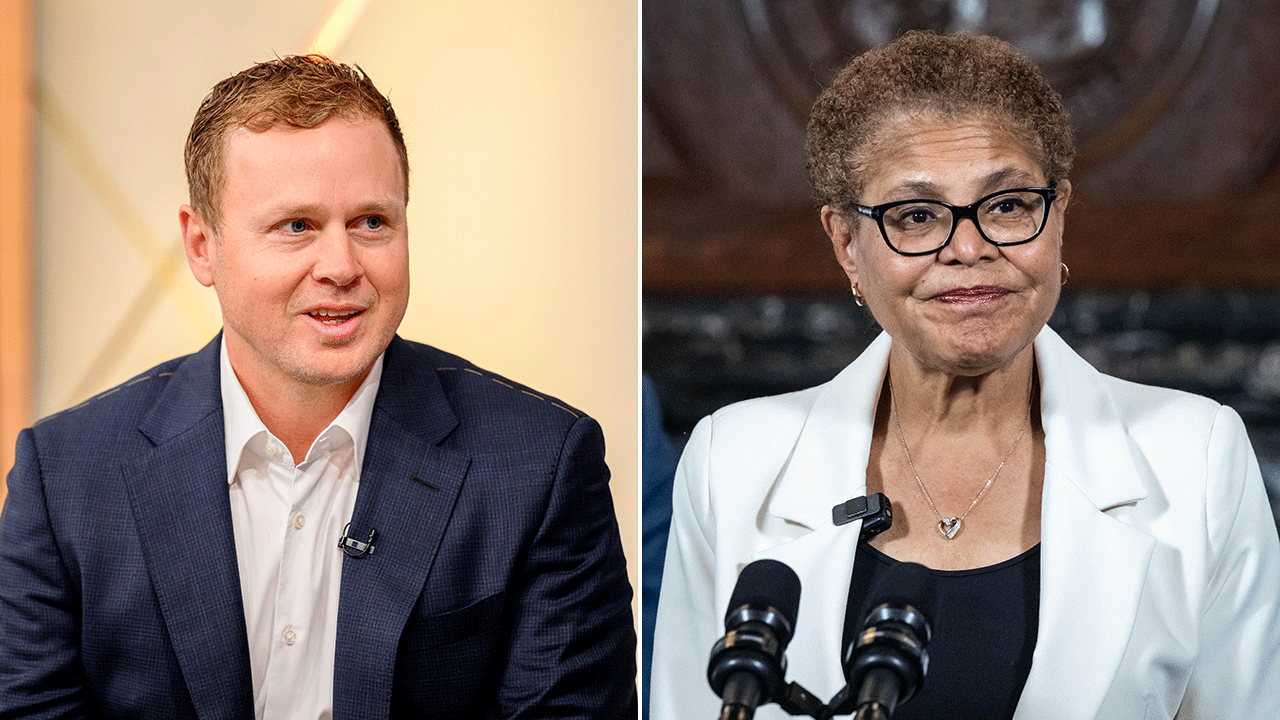
  • Nithya Raman Breaks Down in Tears as She Watches Spencer Pratt Surge Ahead and Push Her Into Third Place in Los Angeles Mayoral Race Shock Result

    Nithya Raman Breaks Down in Tears as She Watches Spencer Pratt Surge Ahead and Push Her Into Third Place in Los Angeles Mayoral Race Shock Result

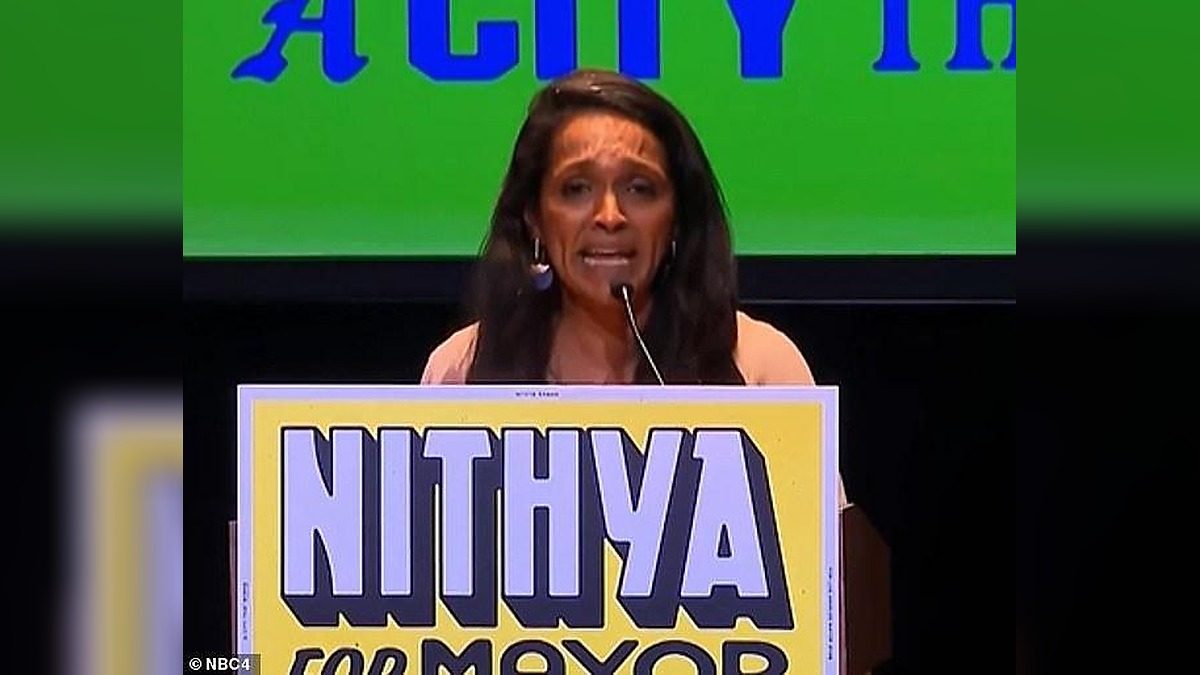
    Los Angeles mayoral candidate Nithya Raman was visibly overwhelmed on Tuesday night as early election figures placed her in a disappointing third position, triggering an emotional reaction in front of supporters as the race began to take shape.

    Standing before her campaign crowd, the progressive city council member struggled to hold back tears as the reality of the initial count became clearer, even as she attempted to frame her campaign in hopeful and personal terms.

    Emotional Speech as Early Results Deliver Setback

    Raman became tearful while addressing supporters, pausing at moments as she thanked her children and reflected on the motivation behind her political journey.

    She described her candidacy as being driven by a long-term vision for the city, saying her efforts were rooted in wanting to build Los Angeles into a place that future generations could be proud of.

    At one point during her remarks, she directly addressed her family, expressing that her campaign had always been about shaping a better urban future for children across the city, not just her own.

    Despite her emotional tone, Raman attempted to maintain optimism, noting that many ballots were still left to be counted and suggesting the final outcome had not yet been fully decided.

    Early Vote Count Places Raman Behind Bass and Pratt

    With roughly 63.1 percent of votes tallied by Wednesday morning, incumbent Mayor Karen Bass was leading the race with 34.8 percent support.

    Reality TV personality turned political candidate Spencer Pratt followed with 30.4 percent, while Raman trailed in third place at 22.3 percent.

    The margin placed Raman more than 40,000 votes behind her competitors at that stage of counting, significantly narrowing her chances of advancing.

    California’s extensive use of mail-in ballots means the race remains subject to change, particularly as additional Democratic-leaning votes are expected to be processed in the coming days.

    However, analysts noted that Bass’s position appeared strong enough to guarantee her progression into the runoff scheduled for November.

    Spencer Pratt Claims Momentum and Challenges Incumbent

    Spencer Pratt, best known for his reality television background, emerged as a surprise contender in the race, maintaining second place as results came in and positioning himself for a likely runoff showdown with Bass.

    Speaking to reporters outside a private election night gathering, Pratt projected confidence and signaled that he was ready for a direct contest with the incumbent mayor.

    He suggested that the campaign was only beginning and hinted at a more aggressive phase ahead, framing the expected runoff as a head-to-head battle for the city’s leadership.

    Pratt also expressed excitement about the next stage of the race and said he believed he had built enough momentum to compete seriously against Bass.

    Debate Invitations and Aggressive Campaign Tone

    Throughout his campaign, Pratt leaned into a confrontational and highly public style, frequently targeting Bass and questioning her leadership record.

    During his election night remarks, he renewed calls for further debates, suggesting that the candidates could continue public face-offs regularly in the lead-up to the runoff.

    His campaign has drawn attention for its unusually direct messaging and unconventional approach, with Pratt positioning himself as an outsider challenging the political establishment.

    He also used his platform to outline plans focused on stricter enforcement policies and a tougher stance on crime and homelessness, which he argues are central issues facing Los Angeles.

    Karen Bass Secures Runoff Spot and Defends Record

    Incumbent Mayor Karen Bass also addressed supporters as results solidified her place in the runoff election.

    She struck a confident tone, emphasizing ongoing efforts to address homelessness and expand affordable housing across the city.

    Bass suggested that her administration had already made progress on key public safety and housing initiatives, and pledged to continue those efforts if re-elected.

    Responding indirectly to Pratt’s challenge, she questioned his readiness for office, pointing to his lack of political experience while acknowledging the frustration among voters that has fueled outsider campaigns.

    A Divided Race Heading Toward November Showdown

    The election is now expected to move toward a November runoff between Bass and Pratt, setting up a stark contrast between an incumbent mayor and a political newcomer with a high-profile media background.

    While Raman’s campaign appears to be slipping out of contention based on current figures, the final outcome could still shift as remaining ballots are counted.

    For now, the race reflects a sharply divided political landscape in Los Angeles, with competing visions for how the city should address crime, homelessness, and long-term urban development heading into the next electoral phase.

  • Spencer Pratt Shocks Los Angeles as Reality Star Storms Into Second Place and Challenges Karen Bass in Explosive Mayoral Runoff Battle

    Spencer Pratt Shocks Los Angeles as Reality Star Storms Into Second Place and Challenges Karen Bass in Explosive Mayoral Runoff Battle

    Reality television personality Spencer Pratt has shaken up the Los Angeles mayoral contest, landing in a strong second-place position in early returns and positioning himself for a rare runoff challenge against incumbent Mayor Karen Bass.

    With roughly half of the ballots counted, the race was already shaping into a two-person contest for the November showdown, pushing Bass beyond the threshold needed for an outright win and confirming a runoff scenario.

    Progressive City Council member Nithya Raman trailed in third as counting continued.

    Election Night Momentum and a Confident Challenger

    Speaking to reporters outside a Mexican restaurant hosting his private election night gathering, Pratt projected confidence and excitement as early results placed him ahead of several established political figures.

    He framed the result as the beginning of a longer fight, suggesting voters were open to his message and hinting that he expected to pull support from across the political spectrum as the race progresses toward November.

    The Associated Press projected Bass would advance, while leaving the final determination of second place pending as additional ballots were counted.

    California’s heavy reliance on mail-in voting means the early tallies often shift as later-arriving ballots—typically more Democratic—are processed.

    A Runoff Set Against a Deeply Democratic Electorate

    Bass, addressing supporters early in the night as projections pointed toward her advancement, struck a tone of continuity and progress.

    She emphasized ongoing efforts to reduce homelessness and improve public safety in the nation’s second-largest city.

    “We are going to continue building a city where people are not living on the streets,” she told supporters, reinforcing her argument that steady leadership remains essential for Los Angeles.

    Despite Pratt’s early surge, the political landscape remains heavily tilted toward Democrats, who outnumber Republicans in Los Angeles by roughly three to one.

    The last Republican mayor of the city left office in 1997, underscoring the steep path ahead if Pratt is to mount a successful challenge.

    A Campaign Built on Fire, Frustration, and Visibility

    Pratt formally entered the race on January 7, the anniversary of the devastating Palisades fire, positioning his campaign around criticism of city leadership and its handling of crises.

    He has repeatedly tied his political message to personal loss, claiming that failures in governance contributed to the destruction of his $3 million home, which he shared with his wife, reality television personality Heidi Montag.

    His campaign has leaned heavily into attention-grabbing tactics, including AI-generated videos, rap-style advertisements referencing The Fresh Prince of Bel-Air, and emotionally charged messaging focused on homelessness and public safety.

    Pratt has argued that Los Angeles requires a more aggressive approach to long-standing urban problems.

    Policy Attacks and Political Positioning

    Bass has faced criticism from multiple directions, including from Pratt on the right and from more progressive challengers such as Raman on the left.

    Raman’s late entry into the race was supported by progressive activists and aligned groups, adding further fragmentation to the field.

    Raman’s campaign has argued that the mayor has not moved quickly enough on key promises, particularly around housing and homelessness, framing the election as a test of whether Los Angeles is ready for more urgent reform.

    Pratt, meanwhile, has sought to position himself as an outsider willing to confront entrenched political leadership, arguing that the city needs a dramatic shift in direction rather than incremental change.

    Debates, Disruptions, and a Contentious Campaign Trail

    The campaign has featured only one major debate appearance involving Pratt and Bass before further planned events fell apart when additional candidates withdrew.

    During that debate, Pratt directly blamed the mayor for systemic failures, a moment that became central to his campaign messaging in the weeks that followed.

    He has also criticized other candidates as indirectly supporting the status quo, attempting to consolidate anti-incumbent sentiment in a crowded field.

    National Politics, Celebrity Influence, and Unusual Alliances

    Although Los Angeles municipal elections are officially nonpartisan on the ballot, Pratt’s registered Republican status and public comments have kept national politics hovering in the background of the race.

    While former Vice President Kamala Harris endorsed Bass, Pratt has drawn attention from an unconventional mix of supporters, including podcast host Joe Rogan and several entertainment figures from reality television and Hollywood.

    Despite occasional praise from political figures aligned with President Donald Trump, Pratt has attempted to distance himself from formal partisan branding, describing his core supporters in broad terms and insisting his campaign is focused more on lived experience than ideology.

    A Long Road Toward November

    Even with a strong early showing, analysts note that Pratt faces significant structural challenges.

    Los Angeles remains one of the most reliably Democratic major cities in the United States, and runoff dynamics typically consolidate support behind the incumbent.

    Still, Pratt’s unexpected rise to second place has injected new energy into a race many expected to be less competitive, setting up a November contest that will test whether his outsider message can survive the realities of a deeply partisan electorate.

    As counting continues and the runoff approaches, the race has already shifted from a predictable incumbent advantage to a more unpredictable political showdown—one that now places a reality TV figure directly on the national political stage alongside one of America’s largest city governments.

  • Steve Hilton Surges Ahead as California Voters Push Republican Ex-Fox Star Into Knife-Edge Governor Race Count Across California Amid Explosive Mail-In Ballot Drama

    Steve Hilton Surges Ahead as California Voters Push Republican Ex-Fox Star Into Knife-Edge Governor Race Count Across California Amid Explosive Mail-In Ballot Drama

    The race for California’s next governor has taken a dramatic turn, with Republican candidate Steve Hilton moving into a strong position as vote counting continues across the state.

    Early results released Wednesday morning showed Hilton leading a crowded field, though the outcome remains uncertain as hundreds of thousands of mail-in ballots are still being processed.

    With California’s electoral system allowing the top two vote-getters—regardless of party—to advance to November’s runoff, the contest has quickly evolved into a tense waiting game involving Democrats, Republicans, and independents competing for limited spots.

    Hilton Gains Momentum While Ballots Continue to Be Counted

    Steve Hilton, a former Fox News personality and ex-UK government adviser, appeared poised to secure one of the two general election slots as counting progressed.

    His campaign reported encouraging early numbers, placing him ahead of several well-known contenders.

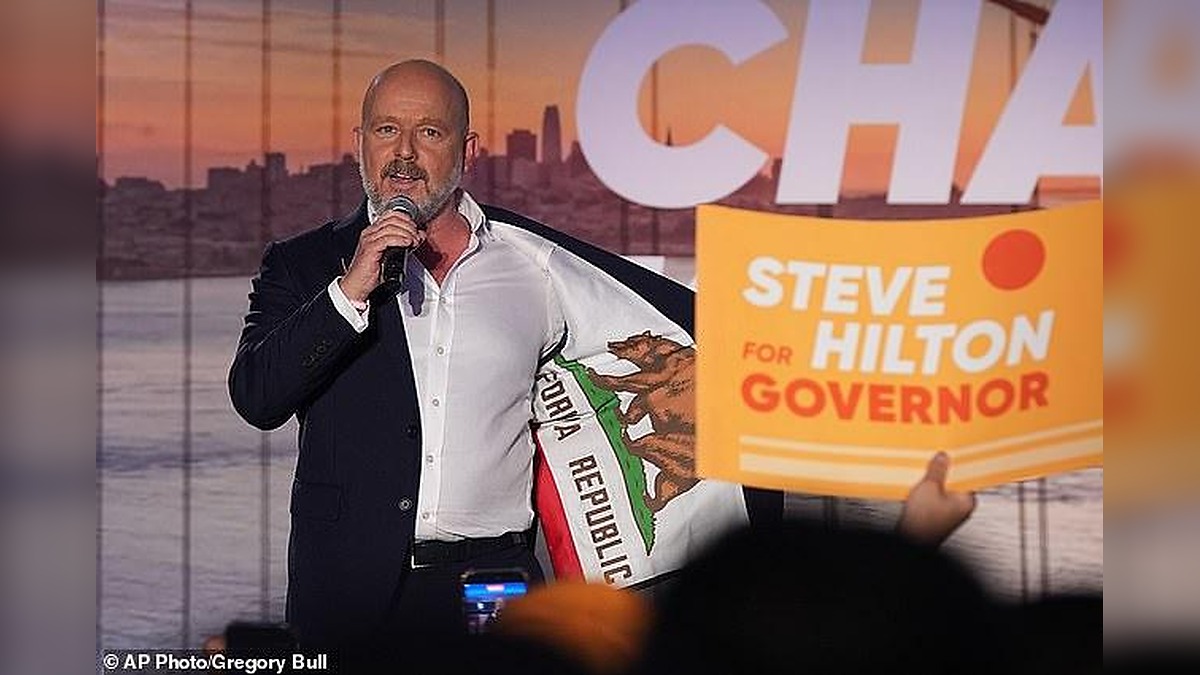
    Speaking to supporters on election night, Hilton struck a celebratory tone while acknowledging the uncertainty still hanging over the race.

    He also paid tribute to former California governor and Hollywood actor Arnold Schwarzenegger, even revealing a custom jacket featuring stitched American and California flags.

    “Arnold, that was for you,” Hilton told the crowd, referencing Schwarzenegger’s tenure as the last Republican to lead the state.

    Despite his strong position, Hilton’s campaign cautioned that the final outcome depends heavily on late-arriving ballots, a common feature of California elections that can shift margins in unexpected ways.

    Becerra Leads Democrats as Steyer Trails in Third

    Among Democratic contenders, former U.S. Health and Human Services Secretary Xavier Becerra emerged as the leading vote-getter in early returns.

    Becerra, a long-time California political figure and former state attorney general, maintained a steady lead within his party as counting continued.

    Trailing behind him was billionaire investor Tom Steyer, who mounted an expensive and high-profile campaign but remained in third place in early results.

    The wide gap between Becerra and Steyer became a focal point of election night analysis, as observers assessed whether Steyer could close the distance or whether the top-two structure would lock in a Hilton–Becerra matchup.

    California’s “Jungle Primary” Shapes High-Stakes Contest

    California’s unique “jungle primary” system has once again defined the shape of the governor’s race.

    Instead of separate party nominations, all candidates compete on a single ballot, with the top two advancing to the general election regardless of political affiliation.

    That structure has fueled speculation that two Democrats—or a Democrat and a Republican—could advance depending on how votes split across a crowded field.

    With a deeply Democratic voter base and no Republican governor since the era of Arnold Schwarzenegger, the GOP faces an uphill battle in statewide contests.

    Still, Hilton’s surge has revived Republican hopes of returning to the November ballot in a competitive position.

    Campaign Strategies Focus on Swing Voters and Political Identity

    Throughout the campaign, Hilton attempted to position himself as a pragmatic alternative to traditional partisan politics.

    He emphasized affordability, tax reduction, and energy expansion while insisting his platform was “not ideological.”

    “Our focus is positive, practical solutions,” Hilton said during a CNN interview, framing his campaign as an appeal to independents and moderate Democrats rather than strict party loyalists.

    Hilton, who previously worked under former UK Prime Minister David Cameron before becoming a U.S. citizen and joining American media, also presented himself as willing to cooperate with federal leadership rather than confrontational governance.

    He has received backing from U.S. President Donald Trump, who endorsed his campaign earlier in the year, adding another layer of national political attention to the race.

    Republican Tensions and Calls for Party Unity

    Internal Republican dynamics also surfaced during the final stretch of the primary.

    Hilton publicly urged fellow Republican candidate Sheriff Chad Bianco to withdraw from the race to avoid splitting the conservative vote.

    His appeal highlighted concerns that a divided Republican field could allow multiple Democrats to dominate the top positions and shut Republicans out of the runoff entirely.

    Despite the pressure, Bianco remained in the race, underscoring ongoing tensions within the party’s California strategy.

    Steyer’s High-Spending Campaign and Unconventional Style

    Tom Steyer’s campaign drew national attention not only for its scale but also for its spending power.

    Reports indicated he invested more than $200 million in advertising, making it one of the most expensive political campaigns in recent U.S. history.

    Beyond financial influence, Steyer leaned into social media engagement and public appearances, including a Pride Month karaoke event in West Hollywood where he joined supporters in an informal celebration.

    However, despite the visibility, his campaign struggled to break into the top tier of the race, raising questions about whether financial resources alone could translate into voter support.

    Democratic Field Complications and Katie Porter’s Struggles

    Another notable figure in the race, former Representative Katie Porter, faced a more difficult path.

    Once considered a rising Democratic star, Porter’s campaign lost momentum following controversy surrounding viral videos of her interactions with staff and media.

    Porter, who previously gained national attention for her sharp questioning during congressional hearings, was projected to finish with a small share of the vote as the crowded Democratic field fragmented support.

    Her struggles added to broader concerns among Democrats that vote-splitting could open the door for unexpected outcomes in the top-two system.

    Final Outcome Still Uncertain as Mail Ballots Drive Delays

    Despite early trends suggesting Hilton and Becerra may be headed toward a November showdown, election officials cautioned that final results could take several days.

    California’s extensive use of mail-in ballots means late-counted votes frequently play a decisive role in close races.

    As counting continues, the governor’s race remains finely balanced, with political futures for multiple high-profile candidates still hanging on the final tally.

  • Scottish MSP Q Manivannan Sparks Political Firestorm in Edinburgh as Critics Question Eligibility and Visa Status in Holyrood, Scotland

    Scottish MSP Q Manivannan Sparks Political Firestorm in Edinburgh as Critics Question Eligibility and Visa Status in Holyrood, Scotland

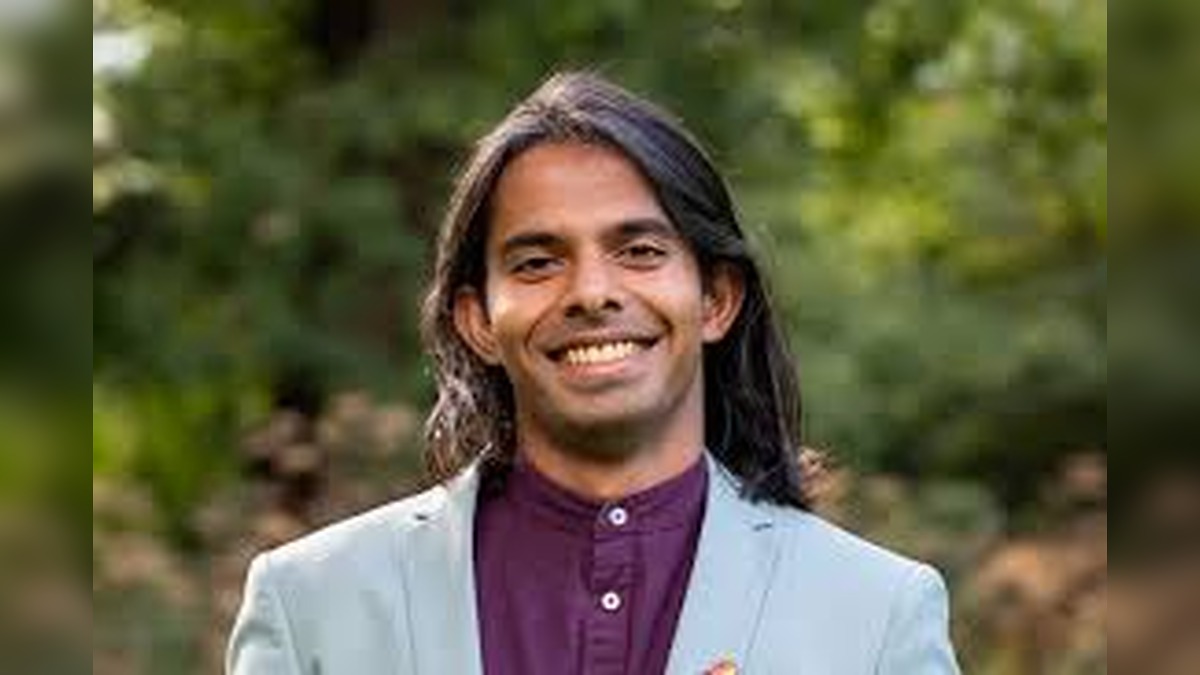
    Q Manivannan has emerged as one of the most talked-about new figures in Scottish politics following their election to Holyrood as part of the Scottish Greens’ recent surge.

    Their victory marked a milestone moment, as they became one of the parliament’s first openly non-binary members and quickly gained attention for their activist background and outspoken political style.

    Addressing supporters after their win, Manivannan framed the result as a broader statement about representation, describing it as a mandate for those they said had been “left behind” or excluded from mainstream politics.

    Questions Raised Over Eligibility and Visa Status

    Shortly after taking office, scrutiny intensified over Manivannan’s right to hold public office in Scotland.

    Reports highlighted that they are not a UK citizen and are in the country on a student visa linked to doctoral studies.

    Under changes to electoral rules, certain foreign nationals with limited leave to remain were permitted to stand for devolved office.

    However, concerns have been raised that Manivannan’s visa is due to expire later this year, potentially placing their continued eligibility as an MSP in question under provisions of the Scotland Act.

    Manivannan has indicated they are seeking to extend their stay through a graduate visa route, which could allow them to remain in the UK for several additional years while continuing to pursue their academic and political work.

    Academic Background and Early Life Claims

    Attention has also turned to Manivannan’s personal and educational history, which has become part of a wider public debate about identity and representation in politics.

    Born in Tamil Nadu, India, in 1996, they were originally known by a different name before later adopting the name “Q.”

    Public accounts and social media posts describe a journey shaped by experiences of marginalisation and identity exploration, though some of these claims have been disputed in media reporting, which points to elements of a more privileged educational and family background.

    Manivannan attended a private school in Chennai before later studying liberal arts and humanities at OP Jindal Global University near Delhi, an institution widely regarded as elite within India’s higher education system.

    They later pursued postgraduate study in peace-related disciplines in Dublin before moving to Scotland to begin doctoral research at the University of St Andrews.

    Activism, Campus Politics and Public Persona

    During their academic career, Manivannan became increasingly involved in activism, particularly around LGBTQ+ issues, social justice campaigns, and pro-Palestinian advocacy.

    They were active in student organising circles and participated in cultural and political events, including poetry readings and fundraising initiatives linked to progressive causes.

    Supporters describe them as a strong community organiser who helped build inclusive spaces on campus, while critics argue that their public positions are deliberately provocative and polarising.

    Their PhD research, focused on themes related to care and peacebuilding, has also been cited in discussions about the intersection between academic work and political activism.

    Social Media Posts and Political Backlash

    Controversy intensified following the resurfacing of social media posts attributed to Manivannan, which some critics argue contained dismissive remarks about white people.

    The posts circulated widely online and prompted calls for clarification.

    A spokesperson for the Scottish Greens defended the comments, suggesting they were intended as satire, while critics argued they were inappropriate for an elected representative whose constituency is predominantly white.

    Manivannan’s social media presence has been a consistent source of attention, both for its outspoken tone and for its alignment with broader debates on race, identity, and political discourse in Scotland.

    Policy Positions and Parliamentary Debate

    Since entering Holyrood, Manivannan has quickly engaged in high-profile political debates.

    They have backed progressive positions on taxation, social equality, drug policy reform, and LGBTQ+ rights, while also supporting motions related to international issues, including Palestinian solidarity campaigns.

    One of their early interventions in parliament involved proposals aimed at banning so-called conversion practices across all settings.

    The move sparked debate among advocacy groups, with supporters viewing it as necessary protection for LGBTQ+ individuals, while critics raised concerns about potential unintended consequences for family discussions and professional guidance.

    Fundraising and Public Accountability Questions

    Further scrutiny emerged over a fundraising campaign linked to visa-related costs, which reportedly raised over £1,000 before being taken down without explanation.

    The disappearance of the page prompted questions about transparency and the handling of donated funds.

    A Polarising New Figure in Scottish Politics

    As Manivannan settles into their role at Holyrood, their presence continues to generate strong reactions across the political spectrum.

    Supporters see a representative voice for underrepresented communities and progressive politics, while critics question aspects of their background, eligibility, and public statements.

    With legal, political, and public debates still unfolding, their tenure as an MSP is likely to remain under close observation as Scottish politics adjusts to one of its most unconventional new entrants.

  • Election Chaos Erupts in Los Angeles as Burned Mail Ballots Are Discovered Inside Downtown Drop Box and Investigators Scramble to Uncover Possible Voter Interference Before Election Day

    Election Chaos Erupts in Los Angeles as Burned Mail Ballots Are Discovered Inside Downtown Drop Box and Investigators Scramble to Uncover Possible Voter Interference Before Election Day

    Los Angeles County election officials have launched investigations into two separate incidents that raised concerns about election security just days before voters head to the polls.

    The cases involve damaged mail-in ballots discovered inside a ballot drop box and vandalism reported at a local voting location.

    Authorities say both incidents were detected over the weekend and are being treated seriously as efforts continue to safeguard the integrity of the election process.

    Fire-Damaged Ballots Found in Downtown Drop Box

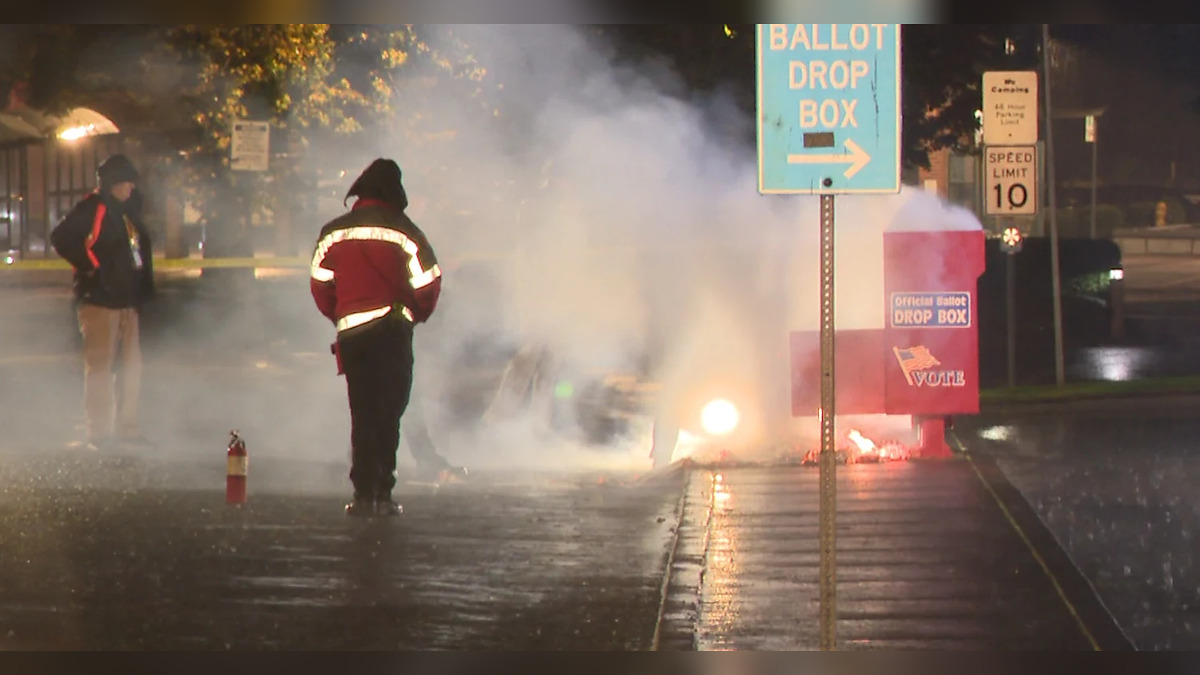
    One of the investigations centers on a ballot drop box located near the Civic Center in downtown Los Angeles.

    According to county election officials, a limited number of vote-by-mail ballots were found with signs of fire damage during a routine inspection on Sunday morning.

    Aerial footage captured by AIR7 documented the area surrounding the drop box.

    Following the discovery, election officials promptly notified the Los Angeles Police Department and filed an official report.

    Investigators are now working to determine how the ballots were damaged and whether the incident was intentional.

    Voting Center Targeted by Vandals

    In a separate occurrence, election workers discovered evidence of vandalism at a voting center situated in Cesar E. Chavez Park early Sunday.

    County officials emphasized that despite the damage, voting activities at the site were not interrupted.

    The facility remained operational, and election services continued without disruption.

    Authorities are examining the circumstances surrounding the vandalism and assessing whether it was connected to broader attempts to interfere with election operations.

    Officials Assess Potential Impact on Voters

    Election administrators are reviewing both incidents to identify whether any registered voters were affected.

    Officials indicated that individuals whose ballots may have been compromised will receive direct communication outlining the next steps available to them.

    Those options may include obtaining replacement ballots to ensure their votes can still be counted.

    County representatives stressed that every effort is being made to protect voters and preserve access to the electoral process.

    County Leaders Condemn Attempts to Disrupt Elections

    Los Angeles County Board Chair and First District Supervisor Hilda L. Solis strongly criticized any actions that could undermine public confidence in elections.

    She reaffirmed the county’s commitment to ensuring eligible residents can vote securely and without intimidation.

    Solis said attempts to damage election materials, interfere with voting facilities, or disrupt election operations are unacceptable and will be met with a coordinated response involving election administrators and law enforcement agencies.

    According to county leaders, protecting voters and maintaining trust in the electoral system remain top priorities as Election Day approaches.

    Public Urged to Report Suspicious Activity

    Election officials also reminded residents that tampering with ballots, voting equipment, election materials, or voting facilities is prohibited by law.

    Members of the public are being encouraged to remain vigilant and report any suspicious behavior involving voting operations or election infrastructure.

    County authorities say community cooperation can play an important role in helping protect the voting process and ensuring every eligible ballot is properly counted.