Category: Cryptocurrency

  • Forward Industries Dumps Massive Solana Holdings as Company Transfers $31M in SOL to Coinbase Prime in United States Amid Market Collapse

    Forward Industries Dumps Massive Solana Holdings as Company Transfers $31M in SOL to Coinbase Prime in United States Amid Market Collapse

    A major development has emerged in the digital asset treasury sector as Forward Industries, currently the largest corporate holder of Solana (SOL), transferred a significant portion of its holdings to Coinbase Prime, raising questions about whether the company is preparing to reduce exposure to the struggling asset.

    The move was identified through blockchain tracking data shared by on-chain analyst Lookonchain, highlighting renewed uncertainty around large institutional crypto treasuries.


    On-Chain Data Reveals 455,000 SOL Transfer After Inactivity Period

    According to blockchain activity, Forward Industries moved approximately 455,784 SOL to Coinbase Prime, the institutional trading and custody arm of cryptocurrency exchange Coinbase.

    The transfer followed a period of relative inactivity from the firm’s Solana wallet, making the movement stand out to market observers monitoring corporate treasury behavior.

    At the time of the transaction, the transferred tokens were valued at roughly $31.87 million, though this represents only a small fraction of the company’s total Solana reserves.


    Aggressive Accumulation Strategy Now Deep in Losses

    Forward Industries shifted into a Solana-focused treasury model in September 2025, quickly becoming one of the largest institutional holders of the asset after receiving backing from major crypto investors including Galaxy Digital, Jump Crypto, and Multicoin Capital.

    During its accumulation phase, the company reportedly spent about $1.59 billion acquiring 6.83 million SOL at an average price of $232.08 per token.

    However, with Solana trading far below those levels in recent months, the position has moved significantly into the red. Current valuations place those holdings at approximately $452 million, reflecting steep unrealized losses.


    Market Downturn Pressures Corporate Crypto Treasuries

    The broader downturn in digital assets has placed several corporate treasury strategies under strain, not just Forward Industries.

    Data shared by Lookonchain indicates that multiple major institutional holders are now facing heavy losses, including:

    • Strategy, a leading Bitcoin treasury firm, reportedly down over $11 billion
    • Bitmine, an Ethereum-focused treasury company, down more than $9.58 billion

    These figures reflect a wider market shift following the bearish conditions that emerged after Q4 2025, which has significantly reduced crypto asset valuations across the board.


    Speculation Builds Over Possible Selling Strategy

    Although Forward Industries has not issued an official statement regarding the purpose of its Coinbase Prime transfer, the timing has fueled speculation that the firm may be preparing to sell part of its holdings.

    The lack of communication has added to market uncertainty, particularly given the company’s large unrealized losses and the broader weakening in Solana’s price trend.

    Some analysts suggest that institutional treasury holders under pressure may be reassessing long-term accumulation strategies as volatility intensifies.


    Solana Price Slides Amid Broader Crypto Weakness

    At the time of reporting, Solana is trading near $65, reflecting a decline of more than 19% over the past week.

    The persistent downward movement has intensified concerns among investors, especially those tracking institutional accumulation strategies that were built during earlier market highs.

    While it remains unclear whether Forward Industries will liquidate any portion of its holdings, the recent transfer to Coinbase Prime has placed the company firmly in the spotlight as market participants watch for further movements.

  • BitMine Sparks Controversy as Firm Pushes Yield-Paying Ethereum Treasury Plan Through Preferred Stock Offering in the United States, Raising Questions Over 9.5% Crypto-Backed Dividends

    BitMine Sparks Controversy as Firm Pushes Yield-Paying Ethereum Treasury Plan Through Preferred Stock Offering in the United States, Raising Questions Over 9.5% Crypto-Backed Dividends

    BitMine Immersion Technologies is deepening its push into the public-market crypto treasury model with a new preferred stock offering designed to raise capital for Ethereum accumulation and infrastructure expansion.

    The move signals a growing shift among digital asset companies toward structured financing strategies that blend traditional capital markets with blockchain-native treasury operations.

    The filing places BitMine alongside a rising group of firms adapting treasury-style accumulation models to Ethereum, rather than Bitcoin, as their core reserve asset.

    Preferred Stock Offering Targets Up to $300 Million in Potential Raise

    The Norwalk, Connecticut-based company has proposed issuing 3,000,000 shares of its 9.50% Series A Perpetual Preferred Stock.

    Each share carries a stated value of $100, implying a theoretical maximum issuance of $300 million if fully subscribed at par.

    The offering is registered under the Securities Act and remains subject to market conditions, meaning the final proceeds could vary depending on investor demand and pricing outcomes.

    BitMine emphasized that the capital raise is part of a broader corporate financing strategy rather than a narrowly defined use case, giving the firm flexibility in how funds are allocated.

    Ethereum at the Core of BitMine’s Treasury Expansion Strategy

    Although the company framed the proceeds in general corporate terms, Ethereum remains central to its long-term plan.

    BitMine stated that funds may be used for acquiring additional ETH, expanding staking operations, and strengthening validator infrastructure.

    The company also highlighted investments in ecosystem-aligned initiatives and potential share repurchases, reflecting a hybrid approach that combines crypto accumulation with traditional corporate financial management.

    BitMine has explicitly positioned ETH as its primary treasury reserve asset, signaling confidence in Ethereum’s role within decentralized finance and blockchain infrastructure development.

    MAVAN Staking Network Anchors Infrastructure Push

    A key pillar of BitMine’s strategy is its validator and staking infrastructure, including its recently launched MAVAN system—short for Made-in America VAlidator Network.

    This infrastructure is designed to support staking operations tied to the company’s Ethereum holdings, enabling participation in network validation while generating protocol-based yield.

    The move aligns BitMine with broader trends in crypto-native yield generation, where firms aim to earn returns through blockchain participation rather than passive asset holding.

    Saylor-Style Treasury Model Reimagined for Ethereum

    BitMine’s approach draws comparisons to Michael Saylor’s Strategy, which popularized the corporate Bitcoin treasury model through equity issuance and structured financial instruments.

    However, BitMine is adapting the model for Ethereum by using preferred equity as a yield-bearing fundraising tool.

    Rather than relying solely on common stock or convertible debt, the company is introducing a 9.50% dividend-paying security designed to attract income-focused investors while funding ETH accumulation.

    This hybrid structure reflects an evolving playbook in digital asset finance, where public companies increasingly use traditional instruments to support crypto balance sheet expansion.

    9.50% Dividend Structure and Investor Protections Detailed

    The Series A Preferred Stock carries a fixed 9.50% annual dividend based on its $100 stated value.

    Dividends are cumulative, meaning unpaid amounts continue to accrue regardless of whether they are declared in any given period.

    Payments are intended to be made in cash when approved by BitMine’s board and are scheduled on a weekly arrears basis, subject to available funds.

    If dividends are missed, the structure includes a compounding penalty mechanism, with unpaid amounts accruing additional dividend obligations over time.

    The rate can increase incrementally up to a capped level of 15% annually, creating strong incentives for timely payment.

    Redemption Rules and Change-of-Control Safeguards Included

    BitMine retains the right to redeem the preferred shares under defined conditions.

    Early redemption within the first 18 months would occur at 110% of stated value, with declining premiums over time until reaching par value after three years, plus any accumulated dividends.

    Additional provisions allow the company to redeem remaining shares if outstanding issuance falls below a specified threshold or if tax-related events occur.

    Investors are also protected under a “fundamental change” clause, which allows holders to require repurchase of their shares at stated value plus accrued dividends if major corporate restructuring events take place.

    Exchange Listing Plans and Market Positioning

    The company has applied to list the Series A Preferred Stock on the New York Stock Exchange under the ticker BMNP.

    Trading is expected to begin within 30 days of issuance, pending regulatory approval.

    Moelis & Company and Cantor are acting as joint lead bookrunners for the offering, underscoring the involvement of established Wall Street institutions in the structure.

    Ethereum Market Context Remains Volatile

    At the time of reporting, Ethereum was trading at approximately $1,793, reflecting ongoing volatility across the digital asset sector.

    BitMine’s filing arrives as institutional interest in crypto-linked yield products continues to grow, even as broader markets remain sensitive to valuation shifts and regulatory uncertainty.

  • House of Lords Warns Bank of England Against Controversial Stablecoin Restrictions as UK Risks Losing Crypto Leadership to Global Rivals in London

    House of Lords Warns Bank of England Against Controversial Stablecoin Restrictions as UK Risks Losing Crypto Leadership to Global Rivals in London

    The UK’s House of Lords has raised concerns over proposed regulations governing stablecoins, warning that overly restrictive rules could weaken the country’s ability to compete in the rapidly evolving digital payments sector.

    Lawmakers are urging financial authorities to revisit key aspects of the framework to ensure innovation is not stifled while maintaining financial stability.

    Parliamentary Committee Reviews Central Bank Proposals

    The concerns were outlined in a new report released by the House of Lords’ Financial Services Regulation Committee.

    The report examined plans put forward by the Bank of England (BoE) and concluded that several measures may require adjustment to strike a better balance between safeguarding the financial system and supporting growth in the digital asset industry.

    While the committee endorsed several elements of the proposed regime, including requirements for stablecoin issuers to maintain full reserves backing their tokens and access to a lending facility in emergencies, it argued that other provisions deserve closer scrutiny before being finalized.

    Reserve Requirements Face Fresh Questions

    One of the key areas highlighted by the committee relates to reserve management rules.

    Under proposals unveiled by the Bank of England last year, issuers of systemically important stablecoins would be required to hold at least 40% of their backing assets in non-interest-bearing bank deposits.

    The central bank has maintained that such measures are necessary to ensure stablecoin holders can redeem their assets reliably and to strengthen public trust in digital payment instruments.

    However, peers warned that the requirement could impose significant operational and financial burdens on issuers.

    According to the report, the rules could undermine the commercial viability of stablecoin businesses and reduce the attractiveness of the UK as a destination for digital finance innovation.

    Concerns Raised Over Proposed Holding Limits

    The committee also questioned plans to introduce temporary caps on stablecoin holdings.

    The Bank of England had suggested limits ranging from £10,000 to £20,000 for individuals and up to £10 million for corporate users.

    These restrictions were designed to reduce the risk of large-scale shifts of deposits away from traditional banks during periods of market stress, mirroring safeguards proposed for a future digital pound.

    However, lawmakers argued that such limits could unnecessarily constrain the development of pound-backed stablecoins and may prove difficult to enforce in practice.

    The report suggests regulators reconsider whether these restrictions are proportionate to the risks involved.

    Regulatory Uncertainty Creates Industry Challenges

    Another issue identified by the committee is the lack of clarity surrounding how regulatory oversight would evolve as stablecoin providers grow in scale.

    Peers pointed to uncertainty regarding the transition from supervision under the Financial Conduct Authority (FCA) to a joint regulatory framework involving both the FCA and the Bank of England.

    They also noted unanswered questions about how HM Treasury intends to classify stablecoins as systemic and bring them under broader payments regulation.

    The committee believes greater transparency is needed so businesses can better understand how the regulatory landscape will operate in the future.

    Warning That the UK Could Lose Ground Internationally

    Lawmakers emphasized that regulation will play a decisive role in shaping the future of the UK’s stablecoin market.

    They argued that authorities must ensure pound-denominated stablecoins can compete fairly with other payment methods and financial products.

    The report cautioned that if the regulatory framework lacks flexibility or fails to provide sufficient certainty, the UK risks falling behind jurisdictions that have already established clearer rules for stablecoin operators and digital asset firms.

    A more adaptable and innovation-friendly approach, the committee said, will be essential if Britain hopes to remain competitive in the global digital finance race.

    Pressure Mounts for Policy Adjustments

    The latest intervention adds to growing pressure on policymakers to soften aspects of the proposed framework.

    Opposition to the rules has been building for months among industry participants and lawmakers.

    In December, members of both Houses of Parliament joined peers in writing to Chancellor Rachel Reeves, urging her to resist measures they believed could hinder the government’s ambition of establishing the UK as a leading hub for digital asset innovation.

    Bank of England Signals Greater Flexibility

    Signs of a potential shift in regulatory thinking emerged last month when Sarah Breeden, the Bank of England’s Deputy Governor for Financial Stability, acknowledged that some earlier proposals may have been too cautious.

    Breeden indicated that the central bank is open to revisiting parts of the framework and exploring ways to create conditions that allow stablecoin businesses to grow while still protecting the wider financial system.

    Her comments were viewed as a signal that regulators may be willing to modify certain provisions before the final rules are introduced.

    Final Rules Expected Soon

    Despite calling for adjustments, the House of Lords committee stressed that regulators should avoid unnecessary delays.

    It urged authorities to maintain existing implementation timelines and provide certainty to market participants as quickly as possible.

    A spokesperson for the Bank of England has indicated that the institution intends to publish its final policy framework and accompanying draft rules later this month, a move that could determine the future direction of stablecoin adoption and regulation across the United Kingdom.

    Industry Watches Next Steps Closely

    With stablecoins increasingly viewed as a bridge between traditional finance and digital assets, the outcome of the regulatory debate is expected to have far-reaching consequences for businesses, investors, and consumers alike.

    As policymakers work to balance innovation with risk management, the decisions made in the coming weeks could significantly influence whether the UK emerges as a leading center for stablecoin activity or struggles to keep pace with competitors that have already established clearer regulatory pathways.

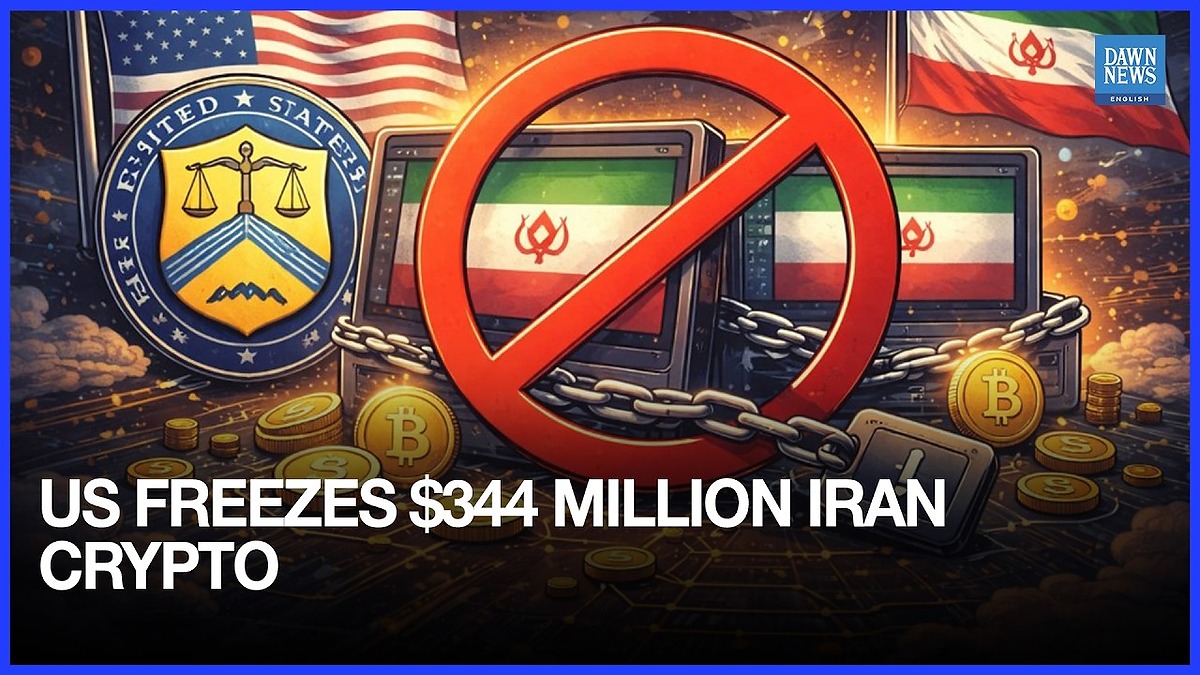
  • US Treasury Targets Iran in Explosive Crackdown as Officials Sanction Major Crypto Exchanges in Tehran and Freeze Digital Financial Networks Across Iran

    US Treasury Targets Iran in Explosive Crackdown as Officials Sanction Major Crypto Exchanges in Tehran and Freeze Digital Financial Networks Across Iran

    The United States has widened its financial pressure campaign against Iran by imposing sanctions on four cryptocurrency exchanges, including the country’s largest digital asset trading platform, Nobitex.

    The move forms part of Washington’s broader “Economic Fury” initiative, which seeks to further isolate Iran from global financial networks.

    Announced by the US Treasury Department on Tuesday, the sanctions also target Iranian crypto platforms Wallex, Bitpin and Ramzinex.

    Their inclusion on the Office of Foreign Assets Control (OFAC) sanctions list effectively bars American individuals and businesses from conducting transactions or providing services to the exchanges.

    Treasury Accuses Iran of Using Digital Assets to Evade Restrictions

    US officials argue that Tehran has increasingly turned to cryptocurrency technologies to bypass economic restrictions and move funds beyond the reach of international sanctions.

    Treasury Secretary Scott Bessent said Iranian authorities have embraced digital assets despite mounting economic difficulties within the country.

    According to Bessent, the government has leveraged cryptocurrency infrastructure to sidestep sanctions and transfer wealth abroad.

    He emphasized that Washington intends to continue targeting financial channels linked to the Iranian state, whether they operate through traditional banking systems or digital asset networks.

    “Economic Fury” Campaign Intensifies During Ongoing Conflict

    The latest sanctions are part of the Treasury Department’s Economic Fury strategy, launched on April 14 amid the continuing conflict involving Iran.

    The campaign began months after military operations involving the United States and Israel against Iranian targets earlier in the year.

    US-Iran tensions have remained elevated as diplomatic efforts to secure a ceasefire have repeatedly stalled.

    Disputes surrounding the strategically important Strait of Hormuz—a key route for global oil shipments—have also contributed to the ongoing standoff.

    Treasury officials have stated that preventing Iran from advancing its nuclear program remains one of the central objectives of the sanctions effort.

    Nearly $1 Billion in Crypto Seized Since Start of Conflict

    The announcement follows recent remarks from Bessent indicating that the Treasury Department has seized close to $1 billion in cryptocurrency linked to Iranian exchanges and digital wallets since the conflict began.

    US authorities have increasingly focused on tracing and disrupting crypto-based financial activity, viewing digital assets as an important mechanism used to circumvent international restrictions.

    Nobitex Identified as Core Hub of Iran’s Crypto Market

    Treasury officials singled out Nobitex as a major target, alleging that the exchange has continued facilitating transactions connected to the Islamic Revolutionary Guard Corps and other sanctioned organizations.

    Blockchain analytics firm Chainalysis described Nobitex as a central component of Iran’s cryptocurrency ecosystem.

    The firm estimates that the platform accounts for roughly half of all crypto trading activity within the country, making it a key gateway for access to digital dollar-denominated assets.

    Because of its dominant role, investigators have characterized the exchange as a critical channel through which Iranian users and institutions interact with global cryptocurrency markets.

    Exchange Executives Also Added to Sanctions List

    In addition to sanctioning the exchange itself, the Treasury Department imposed restrictions on Nobitex Chief Executive Officer Seyed Ali Khoee and Chairman Amir Hossein Rad.

    US authorities further alleged that Nobitex has aided government-linked monitoring activities directed at Iranian citizens, claims that formed part of the justification for the latest penalties.

    Broader Effort Targets Iran’s Financial Networks

    The sanctions against the crypto exchanges represent only one aspect of Washington’s broader campaign against Iranian financing channels.

    According to the Treasury Department, previous actions have disrupted access to tens of billions of dollars that could otherwise have been used by the Iranian government and affiliated groups.

    Those measures have included targeting alleged shadow banking operations, foreign companies involved in Iran’s oil sector, and individuals accused of supporting the country’s military activities.

    With the newest sanctions, US officials signaled that cryptocurrency platforms will remain a major focus as Washington continues its effort to restrict Iran’s access to international financial systems.

  • Bitcoin Plunges as US and Iran Escalate Military Strikes Across the Middle East, Triggering Massive Crypto Market Panic and Liquidations

    Bitcoin Plunges as US and Iran Escalate Military Strikes Across the Middle East, Triggering Massive Crypto Market Panic and Liquidations

    Bitcoin suffered a sharp sell-off on Wednesday, sliding to its weakest level in more than two months as escalating tensions between the United States and Iran combined with heavy market liquidations to fuel a wave of investor anxiety across the cryptocurrency sector.

    The world’s largest cryptocurrency dropped 7% during the day, breaking through a major support level and falling to $65,385 on Coinbase during early trading.

    The decline marked Bitcoin’s lowest price since late March and extended a dramatic downturn that began earlier in the week.

    Massive Sell-Off Follows Steep Tuesday Decline

    The latest losses came after Bitcoin recorded its largest daily decline since early February, shedding more than $4,500 on Tuesday alone.

    The sharp move lower triggered widespread liquidations throughout the crypto market, wiping out billions of dollars in leveraged positions.

    Data from CoinGlass showed that approximately 277,000 traders were liquidated over the past 24 hours, with total losses reaching roughly $1.83 billion.

    Long positions accounted for more than 90% of those liquidations, with Bitcoin and Ether traders bearing the brunt of the damage.

    The broader digital asset market also suffered heavily, with around $150 billion erased from total cryptocurrency market capitalization during the sell-off.

    Analysts Point to Multiple Factors Behind the Drop

    While geopolitical developments have heightened market uncertainty, analysts suggest that the decline cannot be attributed solely to events in the Middle East.

    Andri Fauzan Adziima, research lead at Bitrue Research Institute, said the downturn was driven primarily by a combination of leveraged liquidations, significant exchange-traded fund outflows, and the breakdown of key technical price levels.

    According to Adziima, news surrounding Iran has intensified existing fears among investors rather than serving as the sole catalyst for the market collapse.

    He noted that Bitcoin may continue experiencing volatile and uneven trading conditions in the near term, identifying the $64,000 to $65,000 range as a critical support zone.

    A reduction in geopolitical tensions or an improvement in broader economic conditions could potentially trigger a strong rebound, he added.

    Renewed Military Action Raises Investor Concerns

    The market turbulence coincided with fresh military developments involving the United States and Iran.

    On Tuesday, US Central Command announced that American forces had intercepted multiple Iranian ballistic missiles and drones.

    The military also said it carried out what it described as self-defense strikes on Iran’s Qeshm Island after attempted attacks linked to Iran across the Middle East.

    According to CENTCOM, several Iranian missiles launched toward neighboring countries failed to reach their intended targets.

    The command reported that two missiles were fired toward Kuwait, while three others were launched toward Bahrain.

    The developments heightened concerns among investors already monitoring the fragile security situation in the region.

    Ceasefire Talks Show Little Progress

    The latest confrontation occurred despite a ceasefire arrangement that has been in place between the United States and Iran for roughly two months.

    Negotiations aimed at extending the ceasefire and addressing restrictions around the Strait of Hormuz have continued through indirect channels, but discussions have yet to produce a breakthrough agreement.

    The lack of visible progress has added to uncertainty in global financial markets, with risk-sensitive assets such as cryptocurrencies reacting sharply to geopolitical headlines.

    Trump Insists Communications Continue

    Amid reports suggesting diplomatic contacts had stalled, President Donald Trump disputed claims that communications between Washington and Tehran had ceased.

    Posting on Truth Social on Tuesday, Trump said reports that discussions had stopped were inaccurate, insisting that conversations between the two sides had continued uninterrupted in recent days.

    His remarks followed a report from Iran’s Tasnim news agency, which stated that Tehran intended to suspend talks with the United States until Israeli military operations in Lebanon came to an end.

    Crypto Market Faces Uncertain Near-Term Outlook

    With geopolitical risks rising and traders still unwinding leveraged positions, cryptocurrency markets remain under pressure.

    Investors are closely watching both diplomatic developments in the Middle East and technical price levels in Bitcoin for signs of whether the recent decline will deepen or stabilize in the days ahead.

  • Ethereum Whales Dominate Global Crypto Markets as Large Investors Accumulate Massive ETH Holdings Across Worldwide Exchanges Amid Price Volatility Concerns

    Ethereum Whales Dominate Global Crypto Markets as Large Investors Accumulate Massive ETH Holdings Across Worldwide Exchanges Amid Price Volatility Concerns

    Large holders of Ethereum are steadily increasing their dominance over the asset’s circulating supply, according to fresh on-chain data.

    The latest figures suggest that accumulation by whales and institutional players has continued even through recent price volatility and market pullbacks, reinforcing concerns about growing concentration in the crypto’s ownership structure.

    Industry analytics indicate that nearly a quarter of all ETH in circulation is now held by high-balance wallets, signaling a significant shift toward long-term accumulation by major market participants.

    Whale Wallets Hit Multi-Week High in ETH Accumulation

    Data shared on May 28 by on-chain analytics firm Santiment shows that wallets holding at least 100,000 ETH collectively control around 17.4 million tokens.

    This level marks the highest concentration of holdings among this group in roughly nine weeks.

    Analysts interpret the trend as evidence that large investors are actively buying into weakness, even as broader market sentiment remains uncertain.

    At current valuations, individual whale-linked holdings are estimated to be worth tens of billions of dollars, underscoring the scale of capital concentrated among a relatively small number of entities.

    Supply Concentration Climbs Above 22% Amid Market Shift

    The same dataset reveals that whales now control approximately 22.03% of Ethereum’s total circulating supply.

    This marks a 10-week high in supply concentration, highlighting a growing imbalance between large holders and retail investors.

    Market observers note that this type of accumulation pattern often emerges during periods of price uncertainty, when long-term investors take advantage of discounted valuations to expand positions.

    Interestingly, this phase contrasts with earlier market behavior in 2026, when whales were reportedly distributing holdings.

    Recent data, however, indicates that trend has reversed, with accumulation once again dominating.

    Exchange Reserves Fall as Long-Term Holding Increases

    Additional on-chain insights from CryptoQuant show a continued decline in ETH held on centralized exchanges through the second quarter of 2026.

    This steady outflow suggests that investors are moving assets into private storage, often interpreted as cold wallets, a behavior typically associated with long-term holding strategies rather than short-term trading.

    Analysts argue that this reduction in exchange supply may be contributing to tighter market liquidity, further amplifying the impact of large buy orders.

    Buy Orders Dominate as Sell Pressure Weakens

    Market flow data indicates that ETH buy orders have recently strengthened, with whales appearing to absorb much of the selling pressure coming from smaller retail traders.

    Crypto analyst Crypto Rover noted on social media that whale activity has shown a marked shift toward accumulation, with very few large-scale sell orders observed in recent sessions.

    This imbalance between buying and selling pressure has fueled speculation that major investors are positioning for further upside, potentially anticipating a market recovery.

    High-Leverage Whale Position Sparks Risk Concerns

    In a separate development, reports indicate that a large investor opened a $25.6 million leveraged long position on Ethereum using 25x leverage.

    The trade has drawn attention due to its extreme risk profile, as even a small downward price movement could trigger liquidation.

    The position highlights the aggressive strategies some large traders are willing to deploy, even in volatile conditions, as they bet on continued upward momentum in the ETH market.

    Market Outlook Shaped by Data and Sentiment Signals

    Chart analysis from TradingView continues to show ETH attempting to stabilize after recent fluctuations, though momentum remains highly sensitive to macro and on-chain developments.

    Taken together, rising whale concentration, declining exchange reserves, and aggressive leveraged positioning suggest that Ethereum is entering a period defined by strong accumulation dynamics—but also heightened risk exposure if sentiment reverses.

  • Shocking $1.26 Billion Bitcoin ETF Trade Sees Mysterious Whale Dump BlackRock’s IBIT Shares in Private Dark Pool in United States Sparking Market Panic Debate

    Shocking $1.26 Billion Bitcoin ETF Trade Sees Mysterious Whale Dump BlackRock’s IBIT Shares in Private Dark Pool in United States Sparking Market Panic Debate

    A staggering $1.26 billion transaction involving iShares Bitcoin Trust (IBIT) has triggered intense speculation in financial markets, after analysts suggested the trade may represent a large investor abruptly exiting a major position.

    The block sale, executed last week, has drawn attention not only for its size but also for the method used, raising questions about whether it signals shifting sentiment among sophisticated crypto-linked investors.

    Dark Pool Sale of 29 Million Shares Raises Market Mystery

    On Tuesday, approximately 29.2 million shares of IBIT were reportedly sold through a dark pool — a private trading venue typically used by institutions seeking to avoid immediate public market impact.

    The seller accepted a price roughly $1.01 below the prevailing market level, a discount that analysts say may indicate urgency.

    The transaction has since fueled debate over whether the move was strategic repositioning or a forced liquidation.

    NYDIG Analyst Suggests Directional Investor Exit, Not Hedging Unwind

    Greg Cipolaro, head of research at NYDIG, stated in a Friday note that the available evidence points more toward a single large holder exiting a concentrated position rather than the unwinding of a hedged trade structure.

    According to Cipolaro, the willingness to accept a significant execution cost—estimated at nearly $29.5 million in foregone value—suggests the seller prioritized speed and certainty over price optimization.

    He noted that such behavior is typically associated with investors who are reducing exposure quickly rather than gradually adjusting a portfolio.

    Market Absorbs Shock as Bitcoin Slides but Avoids Panic

    Despite the scale of the transaction, broader markets remained relatively stable.

    Bitcoin fell around 2.8% in the trading session following the trade, but analysts noted that liquidity absorbed the sale without significant disruption.

    Bloomberg ETF analyst Eric Balchunas commented that the market handled the block trade more smoothly than expected, given its size.

    The absence of a sharper selloff has added to uncertainty about the identity and motivation of the seller.

    ETF Outflows and Weak Sentiment Add to Market Pressure

    The block trade occurred against a backdrop of sustained outflows from U.S.-listed Bitcoin exchange-traded funds.

    Data from Farside Investors shows 11 consecutive trading days of net withdrawals, including a $333.6 million outflow on the same day as the IBIT sale.

    In total, more than $2.9 billion has exited Bitcoin ETFs since mid-May, reflecting cooling demand after earlier inflows.

    At the same time, sentiment indicators have weakened.

    The Crypto Fear & Greed Index registered a score of 29, signaling “fear” in the market and reinforcing concerns about investor caution.

    Analysts Debate Whether Sale Was Forced or Strategic Move

    Cipolaro emphasized that public data cannot definitively explain the seller’s motivation.

    He outlined two main possibilities: a forced sale driven by liquidity or balance-sheet constraints, or a deliberate decision to rapidly reduce exposure to Bitcoin-linked assets.

    However, he added that the combination of ETF outflows, weak sentiment, and the premium paid to exit quickly appears more consistent with a discretionary liquidation by a sophisticated investor.

    The identity of the seller remains unknown, but the scale and urgency of the transaction have made it one of the most closely watched Bitcoin ETF trades in recent weeks.

  • Solana Co-Founder Anatoly Yakovenko Sparks Heated Debate as He Pushes Aggressive SOL Disinflation Expansion Across the Global Blockchain Governance Ecosystem

    Solana Co-Founder Anatoly Yakovenko Sparks Heated Debate as He Pushes Aggressive SOL Disinflation Expansion Across the Global Blockchain Governance Ecosystem

    Solana’s long-running debate over inflation, token supply and network incentives has resurfaced, with a new proposal attracting support from some of the blockchain’s most influential figures.

    The discussion centers on whether the network should strengthen SOL’s economic model through higher token burns and faster reductions in issuance.

    New Proposal Sparks Fresh Governance Conversation

    A renewed conversation about Solana’s monetary policy emerged after a GitHub proposal suggested overhauling the network’s fee-burning mechanism.

    The idea quickly gained traction among prominent ecosystem members, including Anatoly Yakovenko, who publicly endorsed further efforts to reduce SOL inflation.

    The discussion began when pseudonymous researcher Dr. Cavey PhD posted a provocative message encouraging debate about making SOL significantly more valuable.

    The comment drew support from key community voices, including Mert Mumtaz, while Solana Foundation executive Vibhu Norby also reacted positively.

    Resource-Based Fee Burn Model Gains Attention

    At the center of the latest debate is SIMD-0547, a proposal introduced on May 30 that argues Solana’s current fee-burning system has little meaningful impact on the token’s supply dynamics.

    According to the proposal, the network currently destroys only a modest amount of SOL through transaction fees, even during periods of substantial activity.

    The author contends that the existing burn rate does not provide token holders with significant exposure to growing network usage.

    Rather than raising transaction fees across the board, the proposal introduces a more targeted solution.

    It would implement a resource-based base fee tied to factors such as compute usage, data loading requirements and write-lock consumption.

    Every fee collected through this mechanism would be permanently removed from circulation through burning.

    Supporters argue this approach avoids placing excessive costs on validators and market makers, groups that could be disproportionately affected by a blanket fee increase.

    Different Transaction Types Would Face Different Costs

    Under the proposed framework, transaction costs would vary depending on how heavily they utilize network resources.

    Examples included in the proposal show that some transactions would experience relatively small fee increases, while others could see substantially higher costs.

    Transactions already paying significant priority fees would be less affected, whereas lower-cost transactions relying mainly on the standard base fee could face much steeper percentage increases.

    The proposal estimates that the new system could destroy between roughly 1,080 and 6,480 SOL each day, depending on network activity levels.

    The author suggested a more realistic figure may be closer to 2,160 SOL daily.

    Even at that level, however, the burn rate would remain far below the approximately 60,000 SOL currently entering circulation through inflation each day.

    Community Questions Impact on Supply Reduction

    The proposal immediately generated debate over whether the additional token burn would be powerful enough to significantly alter Solana’s inflation profile.

    Some community members argued that the projected figures require stronger data to support them, while others presented alternative calculations suggesting lower burn totals.

    Critics also noted that, with inflation still hovering near 3.8%, the suggested burn levels would only modestly offset new token issuance.

    Several participants estimated that network demand would need to increase dramatically before the mechanism could generate meaningful deflationary pressure on SOL’s supply.

    Yakovenko Pushes for Faster Disinflation

    The discussion expanded beyond fee burns when Yakovenko suggested revisiting another proposal aimed at reducing SOL issuance more aggressively.

    Responding to social media posts about strengthening Solana’s monetary policy, the co-founder called for a new governance proposal that would double the network’s disinflation rate.

    That prompted references to SIMD-0411, an existing proposal designed to accelerate the reduction of SOL emissions.

    Under SIMD-0411, Solana’s disinflation pace would increase from 15% to 30%, while maintaining a long-term inflation target of 1.5%.

    Supporters believe the adjustment would allow the network to reach its terminal inflation rate around 2029 instead of 2032.

    Proponents estimate the change would prevent roughly 22.3 million SOL from being issued over a six-year period, resulting in a noticeably lower circulating supply than under the current schedule.

    Memories of Failed Reform Still Loom

    Any new effort to modify Solana’s tokenomics will inevitably be compared to SIMD-0228, a high-profile proposal that failed to secure enough support in March 2025.

    That initiative sought to replace the network’s fixed emissions structure with a market-driven model tied to staking participation.

    Although it received majority backing, it fell short of the two-thirds approval threshold required for adoption.

    The rejection exposed deep divisions within the ecosystem.

    Advocates argued that inflation was unnecessarily diluting token holders and that the network was paying more than necessary for security.

    Opponents, particularly smaller validators, warned that reduced staking rewards could undermine validator profitability and weaken decentralization.

    Balancing Token Value and Network Security

    The latest debate highlights a challenge that has repeatedly surfaced within the Solana ecosystem: how to strengthen SOL’s economic fundamentals without damaging validator incentives.

    Whether the network ultimately pursues larger fee burns, faster disinflation or a combination of both, any successful proposal will likely need to address concerns about maintaining a healthy and decentralized validator network while reducing supply growth.

    As the discussion continues, Solana’s governance community once again finds itself weighing the trade-offs between token scarcity, validator sustainability and long-term network security.

  • Sui Foundation Races to Fix Critical Bugs as Developers Rush Major Upgrade Across the Global Blockchain Network After Three Devastating Outages Shake Confidence

    Sui Foundation Races to Fix Critical Bugs as Developers Rush Major Upgrade Across the Global Blockchain Network After Three Devastating Outages Shake Confidence

    The organization overseeing the Sui blockchain says it has implemented a significant network upgrade aimed at preventing a repeat of the technical failures that recently interrupted operations for more than 15 hours over a two-day period.

    The move comes after a turbulent week for the blockchain, which suffered three separate outages that temporarily halted network activity and raised concerns among users and developers.

    According to Sui’s network status records, the first disruption occurred on Thursday and lasted nearly six hours.

    Two additional outages followed on Friday, one stretching for more than eight hours and another lasting approximately 43 minutes. By Monday, the network’s systems had returned to normal operations.

    Foundation Identifies and Fixes Key Software Problems

    In an update published over the weekend, the Sui Foundation said engineers had deployed fixes targeting the underlying software defects responsible for the interruptions.

    The nonprofit organization also outlined areas requiring further improvement, including stronger failure-isolation mechanisms, enhanced resilience during epoch transitions, and expanded use of artificial intelligence-powered tools to assist with diagnostics and operational monitoring.

    According to the foundation, AI-driven systems played a role in investigating the incidents by helping teams analyze validator logs, gather performance metrics, and identify the source of failures more efficiently.

    The organization stated that validators have now resolved the issues linked to both the gas-processing flaw and a separate bug involving the network’s randomness state.

    As a result, blockchain activity has resumed without further interruptions.

    User Funds Remained Safe During Downtime

    Despite the prolonged outages, the foundation emphasized that no customer assets were endangered.

    It also said the blockchain did not reverse or roll back any transactions that had already been finalized before the network went offline.

    The assurance is intended to ease concerns among users following the latest disruptions, which temporarily prevented normal transaction processing across the ecosystem.

    Recurring Reliability Challenges Continue

    The recent incidents are not the first time Sui has faced operational difficulties.

    Earlier this year, the network experienced another outage that kept the blockchain offline for more than six hours.

    In November 2024, a separate technical issue caused validators to become trapped in a crash loop, resulting in approximately two and a half hours of downtime.

    Despite these setbacks, Sui remains one of the larger blockchain ecosystems in the decentralized finance sector.

    Data from DeFiLlama ranks it as the 13th-largest blockchain by total value locked, with roughly $519 million secured across the network and 137 active protocols operating on the platform.

    Software Release Introduced Critical Bugs

    The foundation traced the latest outages to flaws that were introduced in version 1.72 of the network’s software.

    One of the defects affected the blockchain’s gas-charging mechanism.

    Under certain conditions, the network deducted transaction fees before ultimately rejecting transactions because of insufficient balances.

    This process generated negative account balances, triggering system crashes that brought network operations to a halt.

    Engineers later introduced a temporary remedy to address the original issue and restore functionality.

    However, that interim solution contained a separate weakness that, while considered unlikely to occur, eventually contributed to the third outage.

    The foundation acknowledged that the stopgap measure carried a known risk of causing another network halt while developers worked toward a permanent fix.

    Token Price Slides Following Technical Setbacks

    The outages also weighed on market sentiment surrounding Sui’s native cryptocurrency.

    Before the first interruption on Thursday, the SUI token was trading near $0.99. Since then, the asset has fallen by roughly 11%, changing hands at around $0.88 by Monday.

    The decline contrasts sharply with the token’s performance earlier in May, when it surged approximately 50% to reach $1.41. That rally was fueled by a series of favorable developments, including news that a Nasdaq-listed company had committed a substantial portion of the token supply to staking activities.

    Long-Term Ambitions Remain Intact

    Sui launched its mainnet in May 2023 with ambitions of becoming a highly scalable blockchain capable of supporting rapid transaction processing for mainstream financial applications and institutional users.

    While the latest outages highlight the technical challenges that can accompany rapid growth and software upgrades, the foundation maintains that the network’s recent fixes have addressed the immediate causes of the disruptions and restored normal operations across the ecosystem.